Showing posts with label What's working. Show all posts

Saturday, September 27, 2025

10 Tips for Communicating With Students' Families

Teaching is my second career. I didn't go to school to become a teacher and spent 4 years in the corporate world working with large accounts doing contract management and customer service. I also spent several years in high school waitressing. Those experiences helped me when I came to teaching. And subsequently, I have had very few bad interactions with parents or families of my students. Here are some tips that have helped me create meaningful partnerships with my students and their families. 


✅Address the problem with the student before you call home. 

I always try to have a conversation with the student, brainstorm some ideas of how I can support them going forward or strategies they can use in class to stay on task. I also let the student know that I'll be contacting home about what we discussed. This means that YOU (and the student) are taking steps to solve the problem. You are not blaming the parent or asking them to fix anything for you. 


✅Do your research.

Read the contact log if there is one. Talk to their other teachers and see if they have talked to the parents. Sometimes colleagues will have a better idea of who to call to get results or if there are special circumstances you should know (ie. Dad is more responsive or they don't speak English so it's better to text rather than call.) And don't forget to update the log for your own contacts!

Tuesday, July 1, 2025

Visita al doctor - Practicing body parts in an authentic way

Years ago I used to do a doctor roleplay with my third graders and it was super fun. But then our district gave us a unit framework and that vocabulary was moved down to kindergarten and I just couldn't make it work in the same way. So I was super excited to have the freedom to do kind of whatever I wanted with my sixth graders this past year. The doctor roleplay was back! And it got an upgrade because I saw my students every day!


Side note - Every student at my school takes a quarter each of Spanish, French, and Chinese the first three quarters and then fourth quarter they choose which one they want to continue on with through the rest of middle school. 

In the first quarter I had them we learned basics like greetings, introductions, birthdays, where we lived, feelings, and numbers. More on that later because I also really like that unit! We started with a review since I hadn't seen some of them in months. But also because we would be using most of it in our roleplay later.

First up we learned body parts and we learned the alphabet so that we could spell our names. 


We learned how to use the verb doler and practiced with a card game called Hola Doctor. I love to use this game with all kinds of vocab but in this case I had a ton of Me duele + body part cards and 1 or 2 Hola doctor cards. The students pass out all the cards and hold them face down (like in War.) They take turns asking ¿Qué te duele? The other player flips over their top card, read what hurts, and places it in the middle. They continue to ask and answer until someone flips over the Hola doctor card. When the doctor card is flipped the other player has to take ALL the cards in the middle pile. The person who gets rid of all their cards first is the winner. 

I also used the same cards to play Quiz Quiz Trade. Students found a partner and asked them ¿Qué te duele? and then answered what was on their card. Then they switched. I walked around and encouraged them to act out what hurts and/or point to that body part. Needless to say I have several Oscar nominees amongst my sixth graders. 

After we learned the Sana, sana colita de rana rhyme I added in the Hola doctor card into the Quiz Quiz Trade. If your partner had that card they would recite the rhyme over your hurt body part before they traded cards. That also was pretty hilarious. The Canticos song below was also a huge hit. 


We also watched Mi Burro Enfermo Está and practiced different vocabulary for remedies. Again we played Quiz Quiz Trade. 


Students then filled out a doctor visit dialogue and practiced in lines. One line stayed still while one shifted every time I rang the bell so they got to practice with multipe people. When I felt that they were ready we finally got out the doctor toys and took turns being sick, checking people in, and of course being doctors!


Students had to check in at the front of the room with a receptionist. Then they sat in the middle rows until a doctor was free. Our doctors sat in the back row and assessed the patients. When students were done they went back for a second, third, and sometimes a fourth opinion. 


To make it work I waited until I knew the majority of students could handle the language they needed to do the roleplay. They also got to keep their notebooks on them and refer to them as needed. I also reminded them that if they were not speaking Spanish they would have to sit out. We never played more than 10 minutes or so because I didn't want them to get bored or slip into English. And it worked! We played over the course of a week so everyone had a turn to do each role and on my end of the year surveys most kids wrote they wished we had played more. Classroom management tip - always leave them wanting more!

Grab the worksheets and flashcards I used in this unit in my TPT store by clicking the picture below!


Sunday, February 16, 2025

Three Things I'm Loving in My Classroom Right Now

 I survived my first Valentine's Day in middle school! There was a lot of ccandy, a lot of presents, and a lot of drama but we made it through. Here are some things I'm loving right now!


💖 Interchangeable mini anchor charts

I only have so much room on my walls and I didn't have a good spot for my numbers this year so I made a desk mat instead. But I also wanted some interpersonal phrases that students could use to liven up their conversations. First quarter I had both taped down but they ended up so gross that I had to scrap that by October. Instead I used velcro and I can change them based on what we're doing in class that day. I'm currently working on making one for present tense verb endings. 

Want to make your own? I make them in Powerpoint but Google slides would also work. Resize under design or Page Setup to 8.5 x 11 and then insert a small square about 1/3 of the page. Put in any images and text you want. Then print, laminate and add a velcro dot. 

Tuesday, March 7, 2023

Money Around the World - Teaching About Shopping in the Spanish Classroom

 My fourth graders recently finished a unit on shopping and it was super fun! I haven't done this unit in several years because I seem to run out of time and I've focused on other things (mainly things I knew would be on the district benchmark assessment) but we revamped our district K-5 curriculum this fall and I brought this unit back with a bang!

Be sure to read to the end for a FREE RESOURCE!

I started by introducing different currencies by posting a link to a Thinglink. Students clicked on the arrows to see images of the difference money. I also included a link to this currency conversion site so that students could play around with different numbers. 


I also added money visuals to my wall map. Students of all grades loved looking at what $5 around the world looked like. 


My fourth grade students have already been using numbers during our calendar & weather time to talk about the date and the day's temperature but we practiced some more with a guessing game. This simple game was seriously one of their favorite things to play and it got super noisy!


Then we watched an Edpuzzle video and answered some questions about the different prices that we heard. 


They also read real school supply lists from different Spanish speaking countries and put the items they needed into their shopping carts that I created on jamboard. Later they took turns telling a partner what they needed and the partner put those items in their cart. 


We also started class with a warm-up where they looked at shopping ads and practiced asking ¿Cuánto cuesta? and answering with the price. 

This was also a great way to review some of their math standards like rounding.

They worked again with a partner to create prices for different items in their own shops - practicing ¿Cuánto cuesta? and numbers again. Then I had them walk around and ask each other how much different items cost. Whoever had the best (ie. lowest) price won a point. This turned out to be hilarious because I hadn't told them we were going to play this game so some of them had absolutely outrageous prices. 


We didn't have time to do a full on shopping roleplay game but for their interactive notebooks, they made these cute shopping bags. On the outside they wrote a shopping list and on the inside they drew the items and wrote the prices. Overall, it was a high interest and high engagement unit. 


What do you include in your shopping units? Share in the comments below! 

Click here to grab a whole bunch of authentic resources - school supply lists, back to school ads, infographics, and classrooms around the world. 


Click here to follow me on Instagram!


Monday, December 5, 2022

Sub Plans for Spanish Class

 It's that time of year when you never know when you might be out and need sub plans! I'm actually writing this on a Monday morning after being up all night with a sick dog so at 3:30 in the morning I double checked my emergency plans and then put in for a sub. 

Last week I was out for curriculum writing and my sub left a note about how organized and detailed my plans were and how it made the day much easier. Happy subs are much more likely to return! Here are my top tips for sub plans. 


My NUMBER ONE TIP - leave your plans in a slide deck. 

Subs just pull it up and advance the slides. You can embed any videos, activities, and/or screenshots of worksheets you want completed while you're gone. I had to cover a second grade class last year and the teacher left her plans like this and it made everything SUPER easy. Since my students are used to me teaching from daily slides this makes it so much easier on the sub. I also have a sub binder with different tabs with more information, but I have found that few subs look through it. The slide deck is the most often used. 

In my sub template this year I include several things:

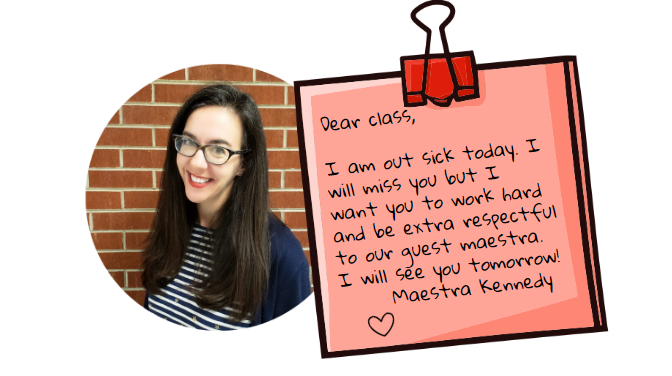
1. A slide with a note from me explaining why I'm out and to please be extra respectful to the guest teacher.


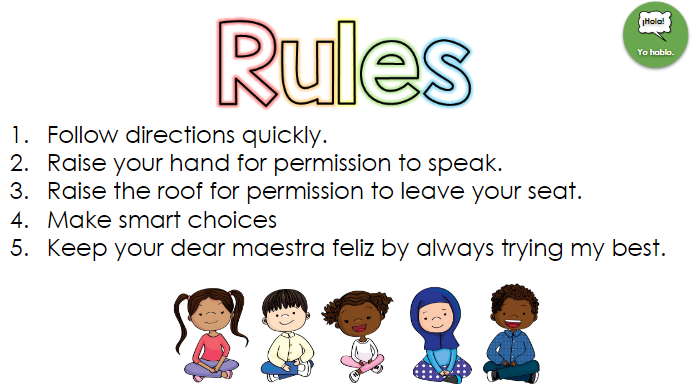
2. A slide with the class rules. We go over these every single Spanish class and it helps with continuity for students. 


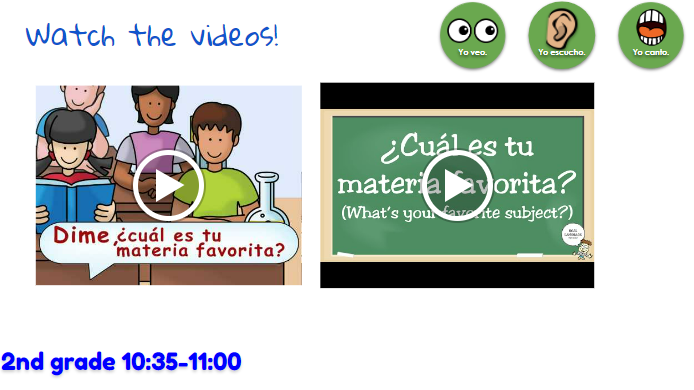
3. If I know I'm going to be out and know the schedule I make slides for each class period and add the time at the bottom so the sub knows when class starts and ends. 


4. Slides with the videos to watch during class. When they're embedded in Google slides you don't have to worry about ads!


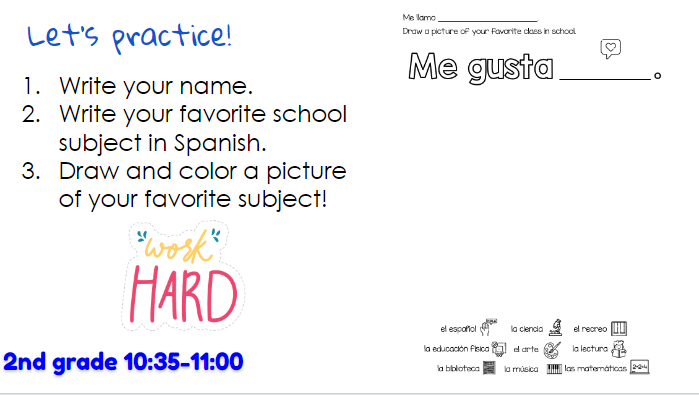
5. A slide with the screenshot of where to go on Google Classroom and what activities to complete OR a screenshot of the worksheet they are to complete after watching the videos together. 


6. For emergency plans (like today) I have the same lesson for all grade levels. For a 25 minute class my go to formula has become a Read Aloud + True or False questions done orally with the sub + coloring or activity page. I include a video of the read aloud as well a copy in the sub bin just in case and I keep copies ready to go. I also include a slide with the answers to the True or False questions. 


7. Emergency plans take a little time at the beginnning of the year but once they're done I don't have to worry about them. I try to have around 3 different emergency plans for the year since I don't get sick often. When I get back tomorrow I will pull out the second book, make the copies, and double check the slide deck is ready to go for the next time I need to be out last minute. 
 
What do you include in your sub plans? Do you have any tried and true ways to make sure class goes smoothly when you're out? Share in the comments below!


Click here to follow me on Instagram!


Sunday, October 30, 2022

Healthy Food Resources for the Spanish Class

In second grade we have been learning about making healthy food choices. If you follow me on Instagram you will have seen some fun activities we've been doing as wrap up this unit. 


In the past I have struggled somewhat with this unit because there are so many different ways to look at this. Do you use my plate from myplate.gov? But then you have to teach food groups and those aren't really high frequency words I can spiral back in later. What about the food pyramid? Those are better but outdated. 

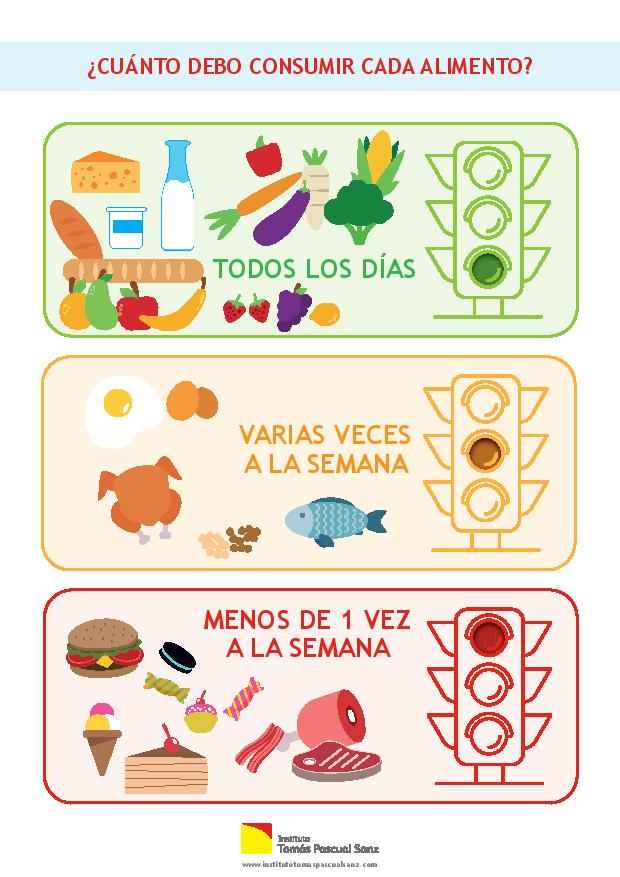
I finally stumbled upon stoplight posters for nutritional choices and it was an AHA moment! Students can review their colors and use frequency words! Once I knew what to search for, I found some really great resources. Like really really good!

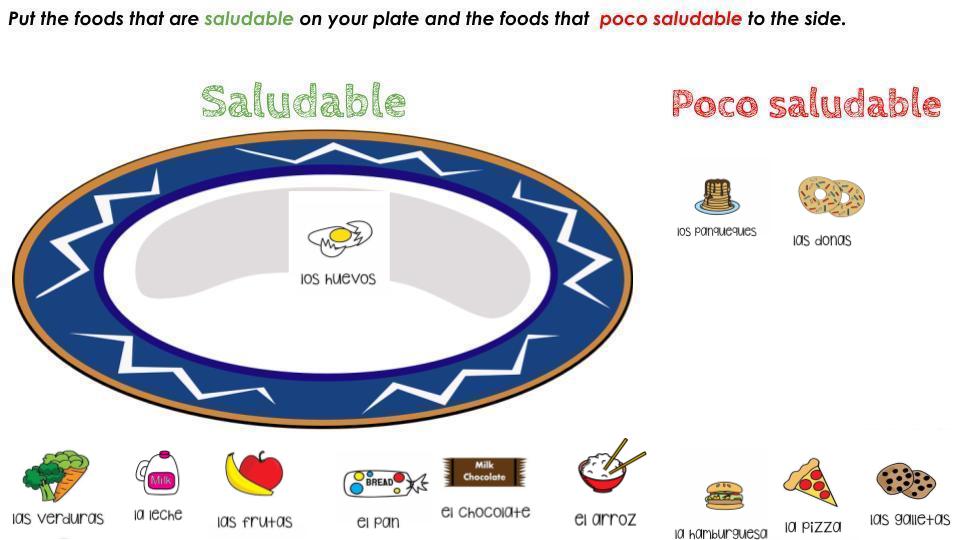
I started with this poster to introduce the idea of comida saludable y comida chatarra. 


We sorted into two categories to start because that was easier for this age group (I added in the third category later). We sorted first as a group and then in pairs in a google slide I had assigned via Google Classroom. 

Our whole group sort

Students then sorted in pairs or indiviudally 

Once they felt comfortable with sorting them into saludable y poco saludable we moved onto the stoplight poster. Taking a strategy from the book Common Ground: Second Language Acquisition Theory Goes to the Classroom, in the first class we made predictions as a class about where different foods would go on the poster. To do this I just cropped the picture and put in my food pics to move around. In the next class we checked our predictions against the actual poster. Click here to see the full resource from the CDC. 

Our class prediction

The actual poster

I actually showed them two posters. They had some items in different places so it was a great way to quickly stop and in English explain that there are many opinions of what healthy eating looks like and so different sources will show different things. Click here for the second poster. It also comes with a cute worksheet that we didn't have time to get to!


We also played this interactive game! I had students whisper to their partner where they thought it should go and then one student came up and pushed the button. Later, I put the link in Google Classroom so they could play on their own. This one was a BIG hit with all my classes. Click here to go to the game. 


All of these activities were woven in with talking about foods around the world and talking about what foods we like and dislike. After students finished their writing page about what foods they liked they could choose to make their own stoplight poster on paper, with my play food, or play the stoplight game on their chromebooks. I'm hoping to take our photos and papers and make a display in our cafeteria. 


I received a huge gift of play food this summer and my students had a blast sorting and labeling it!


I have really enjoyed this unit and so have my students. The best part is you can really do this at any age and it fits well into both IB and AP themes. If I had more time or older students I would have loved to compare posters from different countries. Or even make a poster for someone who is vegetarian or gluten free, etc. 


What are your favorite resources to teach about health and/or healthy eating? Share in the comments below!


Tuesday, September 1, 2020

Asynchronous Elementary Spanish Lessons

 Well this is a year we'll never forget. It's hard to collaborate and share ideas right now because it seems like everyone is doing something differently - live, on-demand, hybrid, from home, from school, on a cart. 

My schedule is completely asynchronous. I post a lesson each day for one grade level and then field emails, comments, and Dojo messages that afternoon as kids and families complete the lesson. I am by no means an expert (and I don't really trust anyone who says they are right now!) but here is what is working for me.


Challenges in the spring - We had very low participation partly because of the following reasons: All the Special Area classes were in different places so it was confusing and overwhelming for families to know where to look each day. I just threw up links on Google Classroom with little direction on which ones they should do. There was no way for me to know if they had completed an activity or not (at least not how I set them up.)

Solutions for this fall:

How to post and organize each lesson - Special Area now has its own Google Classroom for each grade. Check out this post to see how we set it up so that it is easy to find that day's activities. It also is super helpful that we went from some kids having technology in the spring to being fully 1:1 with Chromebooks.


How students know what to do during the lesson -  My school does not have a paid subscription to Pear Deck or Nearpod but if you have access to one of these programs I highly recommend them. The free versions are great for synchronous teaching but you have to pay for the student-paced versions (you're paying for the reporting that comes with it.) Check out this video to see a demonstration I did back in the spring for KWLA. 

I like the Nearpod architecture and especially how it guides students through a lesson with - and this is super important - all of the links, videos, and activities in the same place. This part of these programs is just a slide deck, which is easy to replicate in powerpoint or Google slides.

Because we use Google Classroom all of my lessons are in Google Slides. The first slide has the essential questions and learning targets along with a short video from me explaining and modeling the day's activities. I've written about before how I start the year in English so that students understand the expectations and procedures in Spanish class. These videos are in English now but just if we were in school they will become increasingly in the target language as students get used to how to navigate the online lessons.


Then students click to the next slide which has our daily agenda (something I do regularly in the classroom so it's familiar.) Next, they click through to slides that have Youtube videos to watch and links to click to take them to sites like Quizlet.


For K & 1st I included audio files (and modeled how to use the buttons) for those kiddos who can't read yet. This way parents can get them started but then walk away and let the students work independently.

How to know if students completed the lesson and formative assessments - My final challenge has been setting things up so that there is some accountability and I know that the students have actually completed the lessons. I also need to get some formative assessment so I know how to plan for the next lesson. 

For the older students this is fairly simple. The last slide of their lesson is a link to an exit slip in Google Forms that they fill out. 

Exit slip for elementary Spanish


For grades 1-3 I have one slide where they have to drag pictures of animals or food depending on the grade under columns labeled Me gusta or No me gusta. I also included a video on the last slide that shows how to turn in an assignment on Google Classroom. This is especially important for Kindergarten because they can't produce any language yet. I just want them to turn it in so it is marked done and I can get an idea of how many students are actually watching the lessons. 


So that's currently what I'm doing. How are you structuring your asynchronous lessons? Share in the comments below or on Twitter using the hashtag #earlylang!

Saturday, January 30, 2016

Caperucita Roja Readers Theater

I posted earlier in the year how the story Caperucita Roja is a great for teaching/reviewing introductions and body parts. I did the same readers theater script with my third graders just before winter break but expanded the unit to include a performance in front of a live audience.

My 3rd graders are a tough bunch.  It is often difficult to get them to stay on task. I noticed that when we did Ricitos de Oro y los Tres Osos that they didn't get into the choral reading as much as my second graders did. I wanted to make sure everyone was reading and actively participating so I let them just listen and watch while we did it in a big group.  Then I distributed scripts and let them read and perform it on their own in small groups.

The hook was that after practicing each small group would perform for the class. The best class performers would then be our actors and actresses for a special performance for the 1st graders (who had just finished studying body parts so this would be a great review.) While this did lead to some fights over who read which part, it also had them working hard to read it well, with fluency and emotion, rather than just sitting there and barely mouthing the words like they had with the Tres Osos script.

Our actors performing for 1st grade

The kids who didn't get a speaking part for the big performance still had work to do. Every student made a program for the first graders with one of the characters from the play with body parts labeled. Several girls worked on the scenery during recess and after school. We also had ushers, people to pass out programs and snacks, custodians to clean up, an announcer to welcome the 1st graders, and basically any other small task I could give kids so that everyone was involved.

Every 3rd grader designed a program

It was a HUGE success. The first grade teachers raved about how well the kids read and their students loved it. One first grade student told me "Estoy bien. Estoy dos biens" which was her cute novice way of saying two thumbs up. And the 3rd graders had a blast. It took some extra coordination between me and the classroom teachers but it was well worth it.

The 1st graders loved getting a snack, program, & watching the play.

Get your copy of the Caperucita Roja Readers Theater HERE!


A big shout out to my colleague Alfonso de Torres Núñez who originally gave me the idea of doing readers theater and performances. Have you used readers theater in your classes? Share in the comments below or on Twitter using the hashtag #earlylang!

Saturday, January 23, 2016

Las Meninas

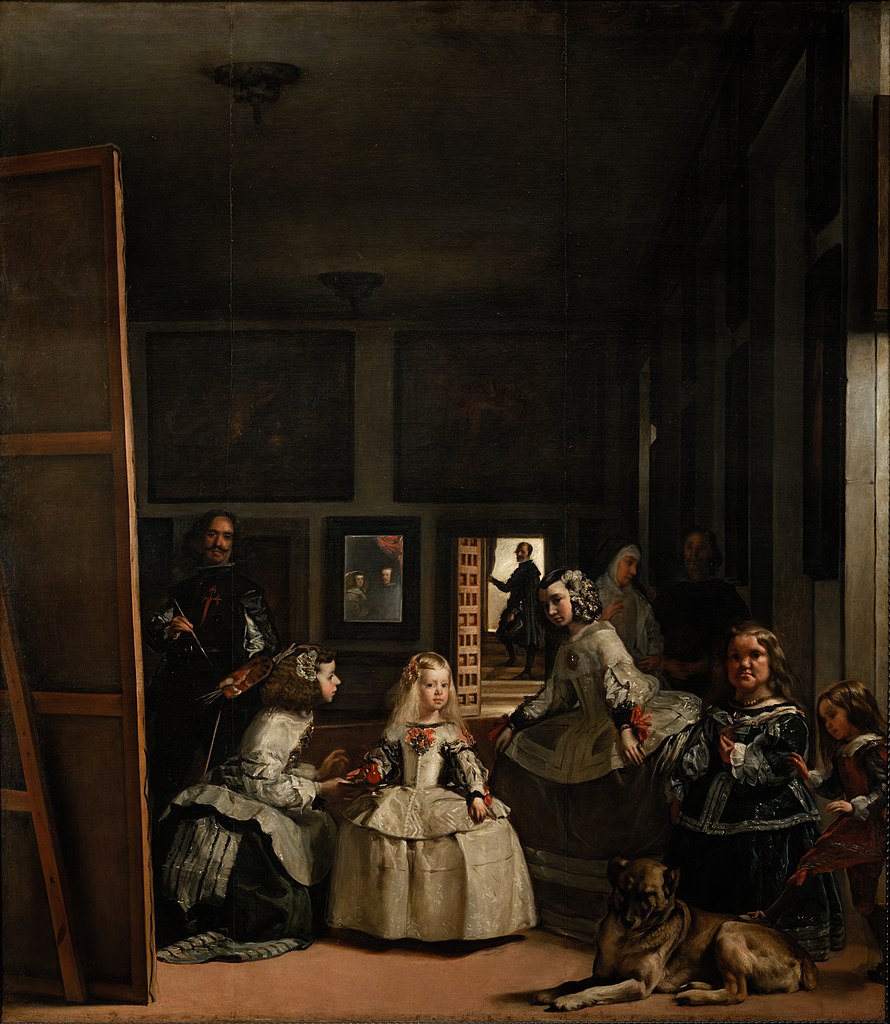
We've been continuing with the art theme in Kindergarten. After learning about Joan Miró, we moved on to Diego Velázquez and Las Meninas. I had seen this painting in Spanish classes and books for years but was absolutely mesmerized by it at the Prado in Madrid.

We started out by just looking at the painting (muchas gracias to my Art teacher who let me borrow her large poster of it) and describing the colors that we saw and saying if we liked it or not. Then we looked more closely at the figures in the painting and talking about them using puppets.


I created Las Meninas puppets by copying and pasting images of the painting in Word and then using the snipping tool to cut out the different figures. Then I printed, laminated, and glued them to popsicle sticks. The students already knew the word artista so I introduced princesa and amiga using the puppets. They asked the puppets ¿Cómo te llamas? and then introduced themselves to Margarita with a bow (because as every 5 year old girl knows you do NOT shake hands with a princesa.) Students also came up and found the different figures in the painting and named them.


Next, we read the book Katie and the Spanish Princess. This book is in English but I translated the words that we already knew into Spanish like princesa, artista, arte, amiga, gracias and venga. I also introduced some new ones like museo, pájaro, and pápa. I found pictures of the paintings in the book and put them into a Word document that I then projected on the SMART board. It was hilarious to watch as they realized that the paintings were the same - Ms. K is magical that way! At the end of the book Katie decides she would rather be a pirata than a princesa so I asked each kiddo what they preferred. Naturally the boys wanted to be piratas and the girls princesas.


We finished up with a coloring page of Las Meninas that I added some text to. As before, I walked around and asked students to tell me what colors they were using.


The next step in our artistic journey includes Pintas Ratones and mixing up color wheels.

If you're interested in the Las Meninas puppets leave a comment below and I will email them to you!

Saturday, January 16, 2016

Hmmm, qué rica mosca

We have been working on expressing likes and dislikes in 1st grade. We started with my favorite song Chocolate but since I only have 15 minutes with them, trying to do my full Chocolate unit with Ricitos de Oro and drinking chocolate caliente didn't seem feasible. So instead I took an idea I got from a colleague at one of our FLES Swap Shops and read them the book Hmmm, qué rica mosca.


In the book, a very hungry fly tries many different and very unhealthy foods. At the end of the story a frog eats the fly. While it doesn't actually have Me gusta in the book, I added it since that was our target structure. We then practiced sorting foods by saludable and poco saludable (which ties in Health and PE standards!) After several lessons talking about healthy and unhealthy foods we rewrote the book so that la mosca eats healthier foods and then escapes la rana at the end.


Students picked a card with a healthy food and then wrote and illustrated their book page. I collected all the pages and made them into a class book (because long time readers know how much I love making class books!)  The kids knew that Ms. K está triste at the end of the original story but with this new book, estoy bien porque la rana NO come la mosca. 


As always the kids loved seeing their book pages. Most of them read along with me and told me if they liked or didn't like the different foods. Thanks Matt for this awesome idea!

You can get the book template here!

How do you teach likes and dislikes? Share in the comments below or on Twitter with the hashtag #earlylang!