Saturday, March 22, 2014

That's how I roll - Games to practice conversations

I don't like to make mistakes. And neither do my kids. Getting students to take the risk and speak in Spanish can be a challenge, especially as they get older. One way to lower that affective filter is to make speaking fun. Here are 3 games I use in class to get my students talking.

Matching Game - Students use the same cards from Manos Rápidos but this time they get 1-4 cards each. Walking around the room they either have to find the other person who has their matching card OR they have to trade cards to get 3 of a kind. To get their matches first they have to say Hola, then they play jankenpón (or your TL's version of rock, paper, scissors.) The student who wins asks for a card while the loser has to hand over the card if they have it. Almost any conversation you are practicing in class can be used for example:

Losing Student : Where are you from?
Winning Student: I'm from (name of country card he wants.)

LS: How's the weather?
WS: Its (weather of the card he wants.)

LS: How are you?
WS: I'm (emotion card he wants.)

And so on and so forth. They sit down when they have their matches so I can see who is still working. Or sometimes they come up to me and I give them new cards so they can keep playing.


http://store.rebeccas.com/store/images/large/NV156.jpgRoll the dice - This is fun with regular dice but is SUPER fun if you happen to have some over-sized or fluffy dice. I have two big fluffy dice I use when we play as a whole group and over-sized dice from the dollar store for games in pairs. To play this game, students roll the dice. Whatever number they roll corresponds to a question their partner then asks them in the TL. Then they switch. You can change up the questions for any vocabulary you are studying. I also like to include a few review questions in there as well.


Dance Party! - My kids perk up whenever they see dance party on my whiteboard schedule. This is a simple game to motivate them to practice the conversation we are studying. I play some music and students dance around the room. When the music stops they have to freeze, then find a friend. They give them a high five and then practice their conversation in Spanish. Make it more interesting by giving them a card with different information that they have to exchange.
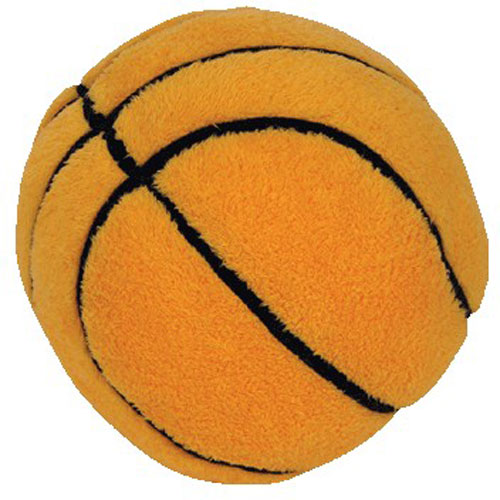
http://www.bbtoystore.com/mm5/beanies/PL_basketball.jpg
Pass the ball - This is another super simple game and is a good one to pull out if you have a few extra minutes at the end of class. The students sit in a circle and pass a ball back and forth. They have to ask and answer a question in the TL before passing. For example - My name is Jennifer. What's your name? If you want students to have more turns split them up into smaller groups, with each group having their own ball.


What are some of the games you play to get your students talking in the TL? Share in the comments below! I love new ideas (in fact the pass the ball game came from a comment here on another post!)

Saturday, March 15, 2014

A day in the life of a FLES teacher

Just another Manic Monday!

6:50 - I arrive at school. Turn on the computer, check email, figure out what I'm doing in each class today and write it on a post-it. Make sure everything I need is on the cart. Run to the workroom to make some last minute copies. I'm going to start centers in 3rd grade so I'm frantically putting together the last activity.

7:30 - Meeting with my principal about my recent observation. She thinks I'm wonderful!

7:45 - Last minute packing and preparing for the day.

8:00 - It's Day 1 in the rotation so I roll into my first class at 8. We do a QR code scavenger hunt. I give the kids the tough "If you even think about using these ipods inappropriately then you will NEVER get to use them again" speech. One student gets upset about who she has to work with and doesn't follow us into the hall. I sneak back to see if she's still in the room. I ask another teacher to call the behavior specialist to come get her since I can't watch her and the class on the other side of the building. No answer. She calls the SAFE teacher. No answer. Luckily her classroom teacher is in the room with her. But still not the way I wanted to start my Monday...

8:30 - Class is over, ipods collected, and wayward child given a stern talking to. I explain that sometimes in life we have to work with people who are not our best friends.Now it's time for planning! Still working on 3rd grade centers....and then I chicken out and decide they need more work together before I set them free on their own.

9:00 - 4th grade class. Huge group of them are missing thanks to orchestra. Another big group is gone because some parent is tutoring in math and he apparently doesn't know the specials schedule. At one point I make the kids stand up because they are falling asleep - stupid time change!

9:30 - Planning! Email teachers about Culture Night coming up. More copies since I changed the 3rd grade plan last minute. You can no longer see my desk.

10:00 - First 2nd grade class. We practice "How old are you?" I pass back a worksheet (or challenge sheet as I called it) and announce that they have won the challenge. We end class learning the basic salsa step and they dance their way into line and out of the room on their way to library.

10:30 - Second 2nd grade class. I tell them the schedule only to have them inform me they have already had this lesson. So I erase and start over! We start our book pages for a book we are making all year called "Todo sobre mi." I play Marc Anthony while they work.

11:00 - First 3rd grade class. The SMART board isn't working, the teacher informs me. I draw my family tree on my cart's whiteboard instead. I realize I made extra copies of the book we are going to read but left them on my desk. Send a student to go get them while I pass out the ones I do have. She returns and says she couldn't find them. I question her and am convinced she didn't look hard enough so I send two more boys. They quickly return with the books that we need. We read the story and they start the worksheet with comprehension questions but then I notice the other 3rd grade class already filing in their room next door. Time to go to library kids!

11:30 - Second 3rd grade class. We review the members of my family. My teacher heart surges as they ask me IN SPANISH how old each member of my family is and what their name is. This class is why I became a teacher. We read our book but run of time for the comprehension questions because they spent so much time discussing my family earlier.

12:00 - Lunch with my team. I have one kid come to me for his recess because I caught him yelling in the hall during a fire drill on Friday.

12:25 - First Kindergarten class. We sing two songs and dance and then play Diego dice. They are a little squirrely but not bad considering the time change.

12:51 - They leave to go to the library. I roll into my next kindergarten class.

1:03 - The next class FINALLY comes in. We sing the same song but run out of time to play Diego dice. During the last song two first graders come in and ask me if I want a cupcake since it's one of their birthdays. Uh...yes! I almost never get birthday cupcakes so I never turn them down when offered.

1:25 - Planning! Stop in to talk to the curriculum coach about bringing up Culture Night Mini-Unit plans in the teacher's team meetings this week. Last minute planning for the after school program.

1:55 - Sitting in the 1st grade class checking facebook, waiting for the students to show up. They finally do. We continue studying clothing, passing around each item as we say it.

2:25 - Roll my cart back to my office, grab my coat, and head outside for afternoon car loop duty. I remind the kids sternly that they need to be in a straight line at a level 0 while they listen for their car rider number.

2:50 - head inside, another check of email and then head to the STEM lab where I will teach the after school program until 4:40.

5:00 - Head home completely exhausted.

Saturday, March 8, 2014

What's Working - QR Code Scavenger Hunt

So my 4th and 5th graders are learning how to describe people. First we learned descriptions with the verb tener. We did a mystery story where we had to guess who stole their teacher's special pencils based on descriptions of people seen in the school after dismissal. Then they wrote their own descriptions and read them to the class to guess.

Now we've added descriptions with the verb ser. Just like with the tener phrases we learned them using Whole Brain Teaching and then they wrote them in their dictionaries. I had several descriptions of people that would have been SUPER easy to just put in a worksheet and have the kids match the description with the picture, but that would have been BOOOORRRING.

So what to do instead?

A scavenger hunt! To liven it up I created a QR Code scavenger hunt. Using the site classtools.net, I created my quiz, printed off the QR codes and then hid them in the hall. (If you have a room you would just hide them there but since I travel I put them in the 4/5 hallway.) I printed off the answer sheet with the character pictures in color, then slid them into sheet protectors so students could write on them with dry erase markers. Then I set the kids loose in the hall with ipod touches*. The codes were hidden in plain sight on the wall, under tables and on the sides of filing cabinets. If they weren't sure of a word then they could look it up in their dictionaries.

1

It was a huge hit! The kids were so focused on finding the codes and the answers that they barely realized they were reading Spanish. If you don't happen to have access to ipods or devices with QR code scanners you could easily do this low-tech and hide the picture and have the students walk around with the descriptions.At the end of class, they wiped their sheets cleaned and turned in their ipods. In the next class, we went over the answers as a whole group, checking our answers on the SMART board (if you hide the answers under a disappearing rectangle they will beg to be the one to come up and click it to reveal the correct answer!)

Have you used QR codes in your classroom? My kids loved this activity so I'd love more ideas on how to incorporate them. Share in the comments below!


*On a side note: Our district has technology you can check out from central office, including a set of 20 ipod touches that have the QR code scanner app. We have over 50 schools in our district but apparently only me and one other teacher at my school know this service exists because NO ONE else ever checks out the tech. I literally had a set of flipcams for 3 months because I just kept extending my checkout when I saw no one else had reserved them. The moral of this story is if you are lacking tech at your school ask around and see if your district doesn't have something similar.

Saturday, March 1, 2014

Projects - Books as Bridges Update

This year my fifth graders have been participating in a program called Books As Bridges, which is part of the local charity The International Book Project. So far we've sent one letter to our pen pals in Panama and we've received letters. Last week, a representative from Books As Bridges stopped by school and did a cultural lesson. She showed pictures and talked about the geography, government, popular music and sports, and types of folk art. Then the students got to make a small piece of Mola art and tried some Gallo Pinto (that I had made) and Tres Leches cake (that our visitor had made.)

I was so worried about this big group  lesson. We had all 120+ 5th graders in the library, listening to an unknown speaker and trying to do an art project in the floor. But it really turned out very well! The other Specials teachers I work with are amazing and stuck around and helped pass out paper, scissors, glue and even clean up afterwards. And the kids were really well-behaved and seemed to really enjoy it.


I even got a lady from our PR office to come and write an article about the lesson. You can read all about at this link here.

The students wrote a second letter leading up to the cultural lesson, which we will be sending along with our cultural package. Then in April we will do our service learning project - a book drive.

Saturday, February 22, 2014

That's How I Roll - Funny Voices

I recently read a post from blogger LoveTeach about how to spice up your teaching with zero effort. Her suggestion to teach with a fake British accent reminded me just how often I use funny voices in my classes. You just can't underestimate the power of the funny voices.

My funny voices started in Japan. I wanted my students to practice questions and answers in English. Since I spoke little to no Japanese I had to act out what I wanted them to do. They also happened to sit boy/girl/boy/girl there so when I acted out the students having the conversation with the person next to them one naturally had a very deep voice and the other a very high voice. One day I acted it out without the voices and I got a very upset little 3rd grader who said, "sensei, sensei blah blah blah" which I translated as "Teacher, where are the silly voices?"

I use the same strategy in my Spanish classes when I want the kids to practice questions and answers during our Enseña period. And since we´ve started doing descriptions in 4th and 5th grade they have become invaluable when learning that gender agreement in our ajectives - Yo soy delgada said in a high pitched voice versus Yo soy delgado said in a deep voice. Do the students think I´m crazy? Yes. Are they having fun? Yes. Are they learning the difference between femenine and masculine adjectives? Yes.

Funny voices are also great for anything that require repetition. So when I'm introducing new vocabulary we say it quiet, loud, high-pitched, low-pitched, angry, sad, like robots etc. Let the students give you ideas. This past week in my after school enrichment program we sang Cabeza, Brazos, Piernas, Pies (or Head, Shoulders, Knees and Toes) many many different ways, my favorite being as old men with canes and Tyrannosaurus Rexes, both student suggestions. As dinosaurs we roared after each verse and as old men we groaned when we couldn't reach our toes. I was almost in tears from laughing by the end.


Do you use funny voices in your classes? How and when? Share in the comments below!

Monday, February 17, 2014

Assessments - Stamp Pages

I have a LOT of students - almost 700 in fact, so assessments can sometimes be overwhelming. One of my professional development goals this year is to get better at assessments. One thing I didn't do much last year was self-assessments. The solution? Stamp pages!

I won't lie - I took this idea straight from the Creative Language Classroom and the JCPS Skydrive. I would have loved to use them exactly as I found them but 1) I don't want JCPS on the header when I work in a different county and 2) some of the I can statements are beyond my little one's cognitive abilities even in English. I can't very well teach them how to tell time in Spanish if they haven't learned it yet in English.


Also, since I have less time with my students, I also have to be aware of how much time it will take to finish a unit. Last year, I re-made the Unit 1 - Getting to Know You stamp page with basically the same I can statements and it took the ENTIRE year! This year, I made a smaller stamp page template and planned shorter units. I also changed it from a teacher assessment tool, where I tried to listen to each student individually and then gave them their stamp to a self-assessment tool where students decided if they earned the stamp or not at the end of the unit. I have 4 buckets on my cart that have 3-4 stamps, an ink pad and a sheet of Spanish stickers. At the end of a unit, we watch a video and pass around the buckets.

Before each stamping session I review with the kids how to use the stamps (i.e. Don't put your fingers or nose in the ink pad; Don't stamp your hand or friend's forehead; Only stamp your stamp page.) We also review why we have the stamp pages. I want them to take their pages home at the end of the year and be able to show their families all the things they learned. If their mom asks them "I can introduce myself" then they should be able to do it. If they have a stamp there and can't do it then they are going to be embarrassed. I'm sure some students just stamp away but most of them are actually very conscientious about it. I also have a blurb at the end that asks them to write about what they are proud they can do. Once we finish with all the stamps I will have them look back and reflect on what they can do and what helped them learn.  So that's my stamp pages.

Update January 2015: This year I have converted to shorter half page stamp sheets. The procedure is the same but now students can take their stamp pages home after each unit rather than waiting to the end of the year. It also gives me more flexibility to change my mind on what to teach throughout the year if I want.

If you are interested in downloading a copy I have made them available in Google docs. Just click here for a full page and here for a half page. Once you have them downloaded just insert a text box, type in your I can statements and move them to the middle of the bubbles. Enjoy!

Saturday, February 1, 2014

That's How I Roll - Storytelling

I've been trying to incorporate more storytelling and books in my classes this year. I've used an A to Z Reading book in my School Supplies unit, read Sombrero Rojo, Sombrero Verde to my kindergartners and I've tried my hand at my own interactive stories with the after school enrichment class and now with my 4th & 5th graders. The students have responded really well, but the trick is finding something relevant to what I'm teaching and is comprehensible enough to hold the kids' attention.

Here is what I am doing with descriptions...

I start by teaching the vocab using my Whole Brain Teaching techniques with gestures, pictures and having students teach other. Right now we are focused on the verb tener with eye color, hair type and other descriptions like bigote, barba, pecas and gafas. We very briefly go over how to conjugate tener, emphasizing the difference between Yo tengo and Él tiene/Ella tiene.

Students then write the words into their dictionaries. Our dictionaries are booklets we made at the beginning of the year where they write any new vocabulary I give them plus if they have free time after finishing a project they can look up words in my picture dictionaries and add them to their own.

Finally we read together a story I wrote about how someone has stolen their teacher's favorite pencils with special erasers (this circles back to our school supply unit.) As we go along I ask yes/no questions and then for words/full sentence answers to make sure they are understanding the story. Words that are familiar and/or I'm trying to emphasize are in a different color so students read those with me. Since it is a mystery whenever I shake my hands at the class they respond with a "dun, dun, dunnnn!" (That's their favorite part!)

Within the story are descriptions of the suspected thief. After we read each description, I change the screen to what looks like a Guess Who game board. Students work in pairs to decide which person was described. After we finish the story we write our own description together as a group on the board and then they split into pairs to write their own. Once they finish, they read them aloud for their classmates to guess.


For reference, this whole process takes about 2 rotations or 4 classes to get done although with some classes more time is needed. I've also done stories where students help "tell" the story by filling in the blanks. Then they illustrated the story we told together.

I've not been trained in TPRS so I'm not sure if what I'm doing qualifies. I do know that I don't have translations of the key words in English on the board to refer to. Students can refer to their dictionaries if they need help.  I'm not really "teaching" them the vocabulary using this method but taking the vocabulary we've learned, practicing it and solidifying it in their brains by seeing it in context.  Both ways, I use the TPRS style circling (as I understand it from videos and blogs I've found,) which I think works very well and helps me to make sure students are understanding.

Do you tell stories in other ways in your classrooms? Share your strategies in the comments below! I would love advice!