Tuesday, April 4, 2023

Graffiti Board - Getting Students to Write in Spanish!

 Today I want to write about a simple change I made in my classroom that has been one of the most impactful - it's my graffiti board. 

When my smart board was replaced with my flat panel I had this white board moved over by my door. The first year I used it to hang up student work. But I realized that most kids were not looking at or interacting with the board much. I wanted something that would get them excited. Cue the graffiti board...

How does it work?

I post a question and a sentence frame for the answer as well as a poster with any vocab they might need. I have a large picture of myself and my dog, Zoey, and sometimes Frida. 

I answer the question and then set out a bunch of different colored expo markers and let the students answer as they leave the room.

Once the board fills up, I erase it, and add a new question.

Setting up the expectations

Only 4th and 5th grade students get to write on the board. I might expand that to 2nd and 3rd at some point but right now it's just the intermediate grades. 

They write on the board when they are lined up and we are waiting for their classroom teacher. 

If students aren't answering the question in Spanish then whatever they wrote is erased and they risk losing the privilege. 

Under no circumstances are they allowed to erase anybody else's writing. (I have one class that is not allowed to use the board because one sneaky kid keeps erasing people's answers.)

So there you go. It was a small change but I've noticed that students who don't usually get very excited about Spanish class always rush to write on the board. Many students will also add to their answers every time they come to class. The younger students will try to read the answers or they look at the vocabulary posters. It's a win-win-win!

Click here to follow me on Instagram!


Sunday, March 19, 2023

Flippity - My New Favorite FREE Resource for the World Language Classroom

 Have y'all heard of Flippity? Because it is my new absolute favorite resource to use in class. The only grade level that I haven't used it with yet has been kindergarten (and that's only because I'm too chicken to get out the chromebooks with them.)

Flippity is a bunch of free google sheets templates that become interactive games and manipulatives you can use in class. They can be customized for any subject or vocabulary. The matching game and the flashcards are my new favorites because you can add audio! Audio! The students can hear the words over and over as they practice them. 


Ways I've used it class so far...

Flashcards- students practice new vocabulary. You can also turn on the audio to hear each word.


Matching game - students race to match the cards. You can set it to have audio so students can hear each word. I usually have the word match to a picture (that I usually pull from flaticon.com). 


Manipulatives - students can drag pieces to do different things. In the picture below, third graders created sentences about what they did in each room of their house. In second grade I had different habitats and animals. Students sorted the animals under the different habitats. 


Board game - students roll the dice in the middle of the board and move their piece. In this game I had first graders name the food and say if they liked it or not in Spanish. On the dollar spaces, they clicked the card deck in the middle and had to add two prices together and answer in Spanish. 


There are a bunch more template but these four are my go tos at the moment. 

Pros:

Easy to use

Customizable to the vocabulary & content you want students to practice

AUDIO! You can set the audio to Spain Spanish or Latin American Spanish

FREE!

Students love playing the flippity games

Cons:

You can't track student progress or see who has completed what

It can take a minute to set up until you get the hang of it


Have you used Flippity? I'd love to know how you're using it. Share in the comments below!


Click here to follow me on Instagram!

Tuesday, March 7, 2023

Money Around the World - Teaching About Shopping in the Spanish Classroom

 My fourth graders recently finished a unit on shopping and it was super fun! I haven't done this unit in several years because I seem to run out of time and I've focused on other things (mainly things I knew would be on the district benchmark assessment) but we revamped our district K-5 curriculum this fall and I brought this unit back with a bang!

Be sure to read to the end for a FREE RESOURCE!

I started by introducing different currencies by posting a link to a Thinglink. Students clicked on the arrows to see images of the difference money. I also included a link to this currency conversion site so that students could play around with different numbers. 


I also added money visuals to my wall map. Students of all grades loved looking at what $5 around the world looked like. 


My fourth grade students have already been using numbers during our calendar & weather time to talk about the date and the day's temperature but we practiced some more with a guessing game. This simple game was seriously one of their favorite things to play and it got super noisy!


Then we watched an Edpuzzle video and answered some questions about the different prices that we heard. 


They also read real school supply lists from different Spanish speaking countries and put the items they needed into their shopping carts that I created on jamboard. Later they took turns telling a partner what they needed and the partner put those items in their cart. 


We also started class with a warm-up where they looked at shopping ads and practiced asking ¿Cuánto cuesta? and answering with the price. 

This was also a great way to review some of their math standards like rounding.

They worked again with a partner to create prices for different items in their own shops - practicing ¿Cuánto cuesta? and numbers again. Then I had them walk around and ask each other how much different items cost. Whoever had the best (ie. lowest) price won a point. This turned out to be hilarious because I hadn't told them we were going to play this game so some of them had absolutely outrageous prices. 


We didn't have time to do a full on shopping roleplay game but for their interactive notebooks, they made these cute shopping bags. On the outside they wrote a shopping list and on the inside they drew the items and wrote the prices. Overall, it was a high interest and high engagement unit. 


What do you include in your shopping units? Share in the comments below! 

Click here to grab a whole bunch of authentic resources - school supply lists, back to school ads, infographics, and classrooms around the world. 


Click here to follow me on Instagram!


Monday, December 5, 2022

Sub Plans for Spanish Class

 It's that time of year when you never know when you might be out and need sub plans! I'm actually writing this on a Monday morning after being up all night with a sick dog so at 3:30 in the morning I double checked my emergency plans and then put in for a sub. 

Last week I was out for curriculum writing and my sub left a note about how organized and detailed my plans were and how it made the day much easier. Happy subs are much more likely to return! Here are my top tips for sub plans. 


My NUMBER ONE TIP - leave your plans in a slide deck. 

Subs just pull it up and advance the slides. You can embed any videos, activities, and/or screenshots of worksheets you want completed while you're gone. I had to cover a second grade class last year and the teacher left her plans like this and it made everything SUPER easy. Since my students are used to me teaching from daily slides this makes it so much easier on the sub. I also have a sub binder with different tabs with more information, but I have found that few subs look through it. The slide deck is the most often used. 

In my sub template this year I include several things:

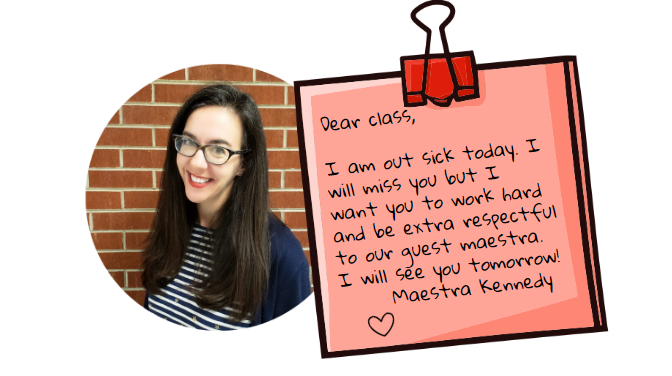
1. A slide with a note from me explaining why I'm out and to please be extra respectful to the guest teacher.


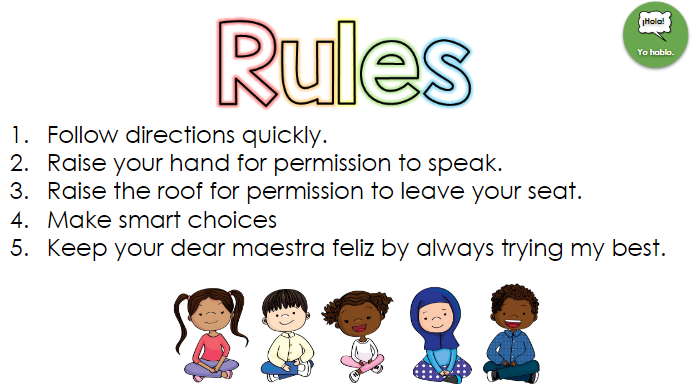
2. A slide with the class rules. We go over these every single Spanish class and it helps with continuity for students. 


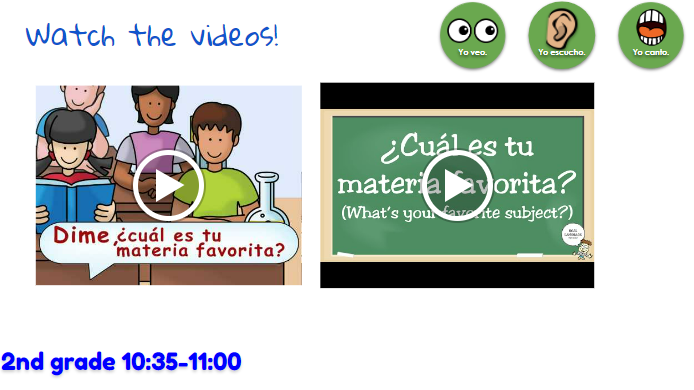
3. If I know I'm going to be out and know the schedule I make slides for each class period and add the time at the bottom so the sub knows when class starts and ends. 


4. Slides with the videos to watch during class. When they're embedded in Google slides you don't have to worry about ads!


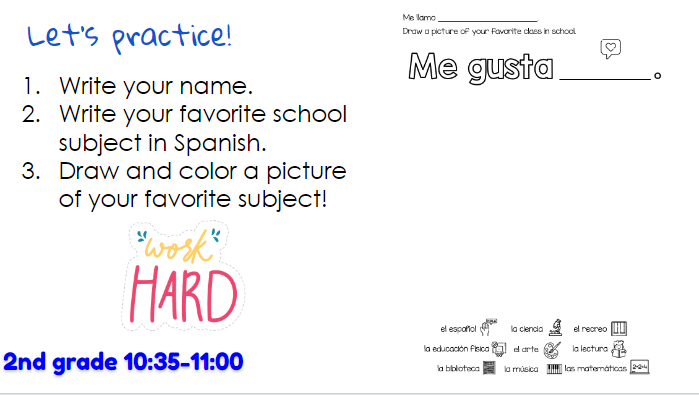
5. A slide with the screenshot of where to go on Google Classroom and what activities to complete OR a screenshot of the worksheet they are to complete after watching the videos together. 


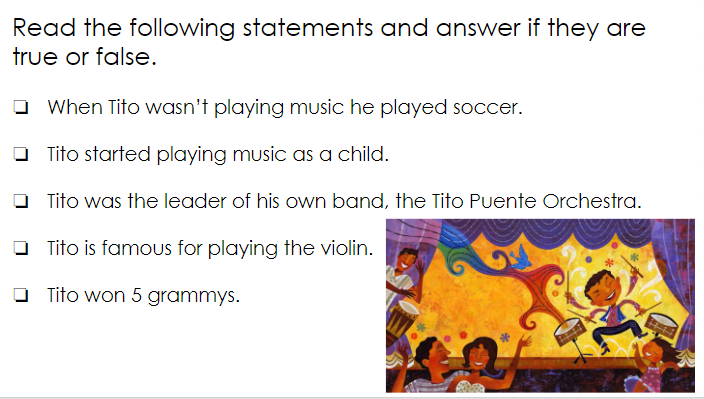
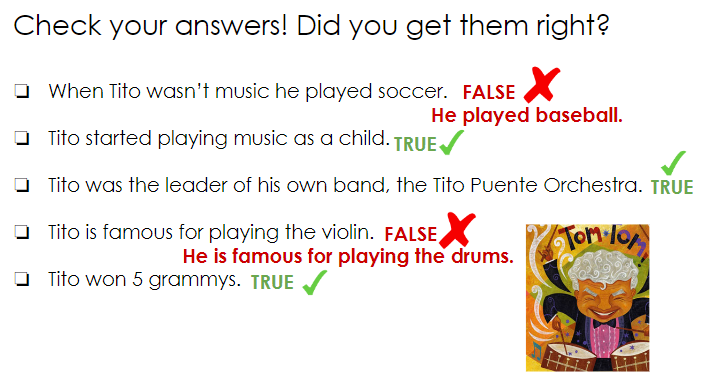
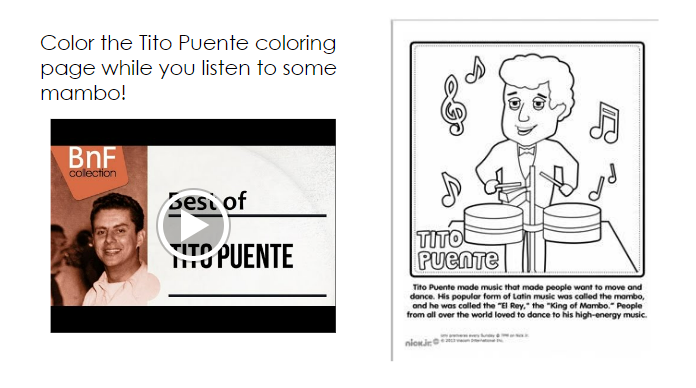
6. For emergency plans (like today) I have the same lesson for all grade levels. For a 25 minute class my go to formula has become a Read Aloud + True or False questions done orally with the sub + coloring or activity page. I include a video of the read aloud as well a copy in the sub bin just in case and I keep copies ready to go. I also include a slide with the answers to the True or False questions. 


7. Emergency plans take a little time at the beginnning of the year but once they're done I don't have to worry about them. I try to have around 3 different emergency plans for the year since I don't get sick often. When I get back tomorrow I will pull out the second book, make the copies, and double check the slide deck is ready to go for the next time I need to be out last minute. 
 
What do you include in your sub plans? Do you have any tried and true ways to make sure class goes smoothly when you're out? Share in the comments below!


Click here to follow me on Instagram!


Sunday, October 30, 2022

Healthy Food Resources for the Spanish Class

In second grade we have been learning about making healthy food choices. If you follow me on Instagram you will have seen some fun activities we've been doing as wrap up this unit. 


In the past I have struggled somewhat with this unit because there are so many different ways to look at this. Do you use my plate from myplate.gov? But then you have to teach food groups and those aren't really high frequency words I can spiral back in later. What about the food pyramid? Those are better but outdated. 

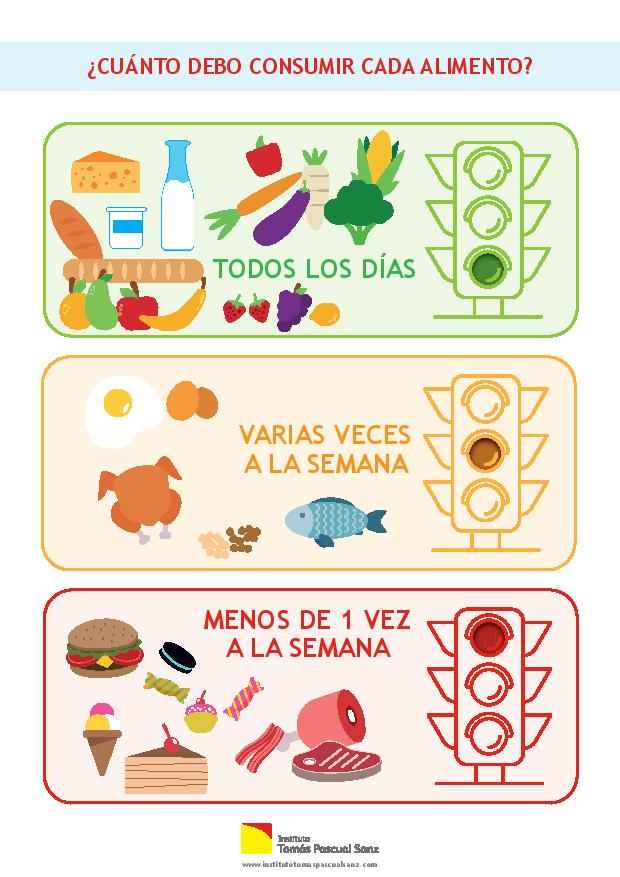
I finally stumbled upon stoplight posters for nutritional choices and it was an AHA moment! Students can review their colors and use frequency words! Once I knew what to search for, I found some really great resources. Like really really good!

I started with this poster to introduce the idea of comida saludable y comida chatarra. 


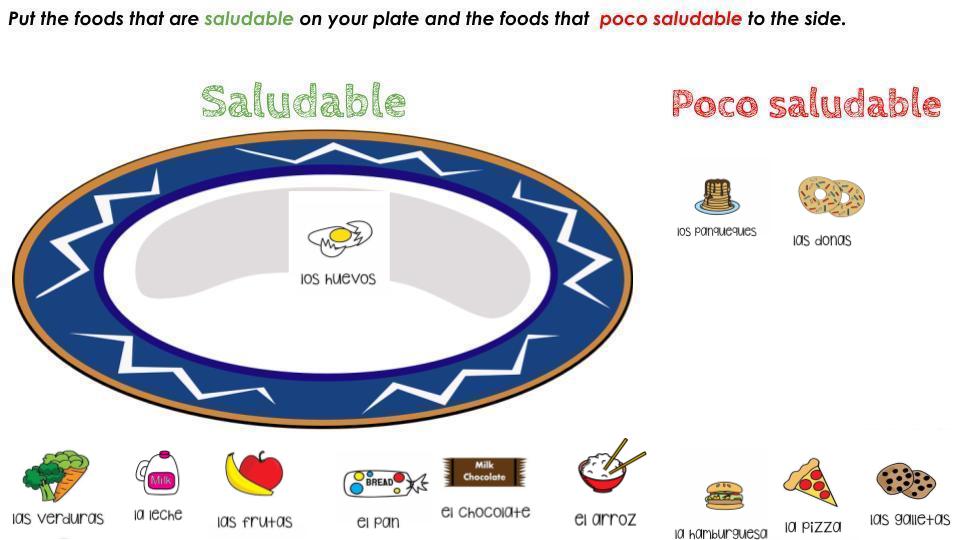
We sorted into two categories to start because that was easier for this age group (I added in the third category later). We sorted first as a group and then in pairs in a google slide I had assigned via Google Classroom. 

Our whole group sort

Students then sorted in pairs or indiviudally 

Once they felt comfortable with sorting them into saludable y poco saludable we moved onto the stoplight poster. Taking a strategy from the book Common Ground: Second Language Acquisition Theory Goes to the Classroom, in the first class we made predictions as a class about where different foods would go on the poster. To do this I just cropped the picture and put in my food pics to move around. In the next class we checked our predictions against the actual poster. Click here to see the full resource from the CDC. 

Our class prediction

The actual poster

I actually showed them two posters. They had some items in different places so it was a great way to quickly stop and in English explain that there are many opinions of what healthy eating looks like and so different sources will show different things. Click here for the second poster. It also comes with a cute worksheet that we didn't have time to get to!


We also played this interactive game! I had students whisper to their partner where they thought it should go and then one student came up and pushed the button. Later, I put the link in Google Classroom so they could play on their own. This one was a BIG hit with all my classes. Click here to go to the game. 


All of these activities were woven in with talking about foods around the world and talking about what foods we like and dislike. After students finished their writing page about what foods they liked they could choose to make their own stoplight poster on paper, with my play food, or play the stoplight game on their chromebooks. I'm hoping to take our photos and papers and make a display in our cafeteria. 


I received a huge gift of play food this summer and my students had a blast sorting and labeling it!


I have really enjoyed this unit and so have my students. The best part is you can really do this at any age and it fits well into both IB and AP themes. If I had more time or older students I would have loved to compare posters from different countries. Or even make a poster for someone who is vegetarian or gluten free, etc. 


What are your favorite resources to teach about health and/or healthy eating? Share in the comments below!


Sunday, October 23, 2022

Día de muertos Ideas and Resources for Spanish Class

It's that time of the year! Halloween and Dia de muertos are fast approaching. Here are some ideas and resources to get you started!


1. Build your ofrenda! This year I put mine in the hallway so that students can see it every day on their way to their specials classes. The gym teacher overheard a kid calling it the "Coco table!" I only actually teach Day of the Dead to 2nd grade since their focus for the year is Mexico but other students love seeing the table and posters.


I use fake apples and flowers from the craft shop. The papel picado came from Hobby Lobby. The calaveras came from Rite-Aid last year and the posters are from Teacher's Discovery. I like to use butcher paper and label everything so students can easily see what the names for each item are in Spanish.


I also added this make your own ofrenda page this year! Students can color and write a description of their own ofrenda. Or have students decorate their own ofrenda using Google Jamboard. 


2. Watch some videos! These videos are in English but they are short and are a nice introduction to the holiday. It was a nice introduction this past week to Día de muertos.


3. Read some books! I checked this book out from the library. It's English with lots of Spanish mixed in. My plan is to "read" it in Spanish to my students, where I will just simplify the language and describe the pictures for my students. And then fingers crossed maybe some of them will check it out and read it on their own later.


I also have this book, which will be good to review the family members honored during Día de muertos celebrations. After I use them in second grade, my plan is to put them out on the ofrenda so students can look at them.


I also added this cute booklet this year - perfect for novice learners!


4. Have students show what they have learned! I will have students look at the ofrenda, the posters in the hallway, and Día de muertos infographics to label an ofrenda. Then they can color it. 


We also do a compare and contrast activity. I've used hula hoops in the past and my students thought that was super fun. I also just got a new venn diagram pocket chart that I'm dying to try out! 


You can get your own word wall words, labeling and matching worksheets, and links to the infographics in my Teachers Pay Teachers store!


What are your favorite Día de muertos activities and resources? Share in the comments below!