Sunday, October 23, 2022

Adios Monstruo - Teaching Body Parts in Elementary Spanish

 A few years back my district wrote a K-5 World Language curriculum and benchmark assessments. It was great to have some direction and all the teachers were teaching the same things but it also meant that a lot of my favorite projects got the ax because they didn't fit in where they used to. One of those was my Adios Monstruo class book I used to do in second grade (read more about it here). 

Technically, in kindergarten we don't learn about body parts and emotions until the third unit after winter break BUT I have found that if I wait until then to introduce body parts they will not know them well enough for our benchmark assessment in March. So instead I introduce our body parts song on the first day of school and body parts are included in our classroom expectations (piernas cruzadas, manos dobladas, bocas cerradas, y ojos en la maestra.) 

This year more than usual I've been getting into the Halloween vibe (maybe it's this awesome October weather we've been having in Kentucky?) So I decided to hit body parts harder at the end of our first unit to make monstruos. It's also given us a chance to practice colors and school supplies (which is one of the focuses of unit one.)

Learning Intention - I am learning about myself and my classroom so that I can follow directions and participate fullly in class. 

Success Criteria - 

I can recognize and list different colors. 

I can list school supplies I need in class.

I can list parts of my body.

I can listen and follow directions to create a monstruo. 


To start we watched Adios Monstruo. I paused it to review each body part and we practiced Tengo miedo and No tengo miedo.


In the next class we did a spin and draw activity. This page is nice because you can make it an independent activity OR you can do it in whole group. Since kindergarten students aren't quite ready for independent work AND staying in the target language, we did it in whole group using the website WheelOfNames.com (here is a link to mine already made.) The kids had a lot of fun as we drew our monstruos.


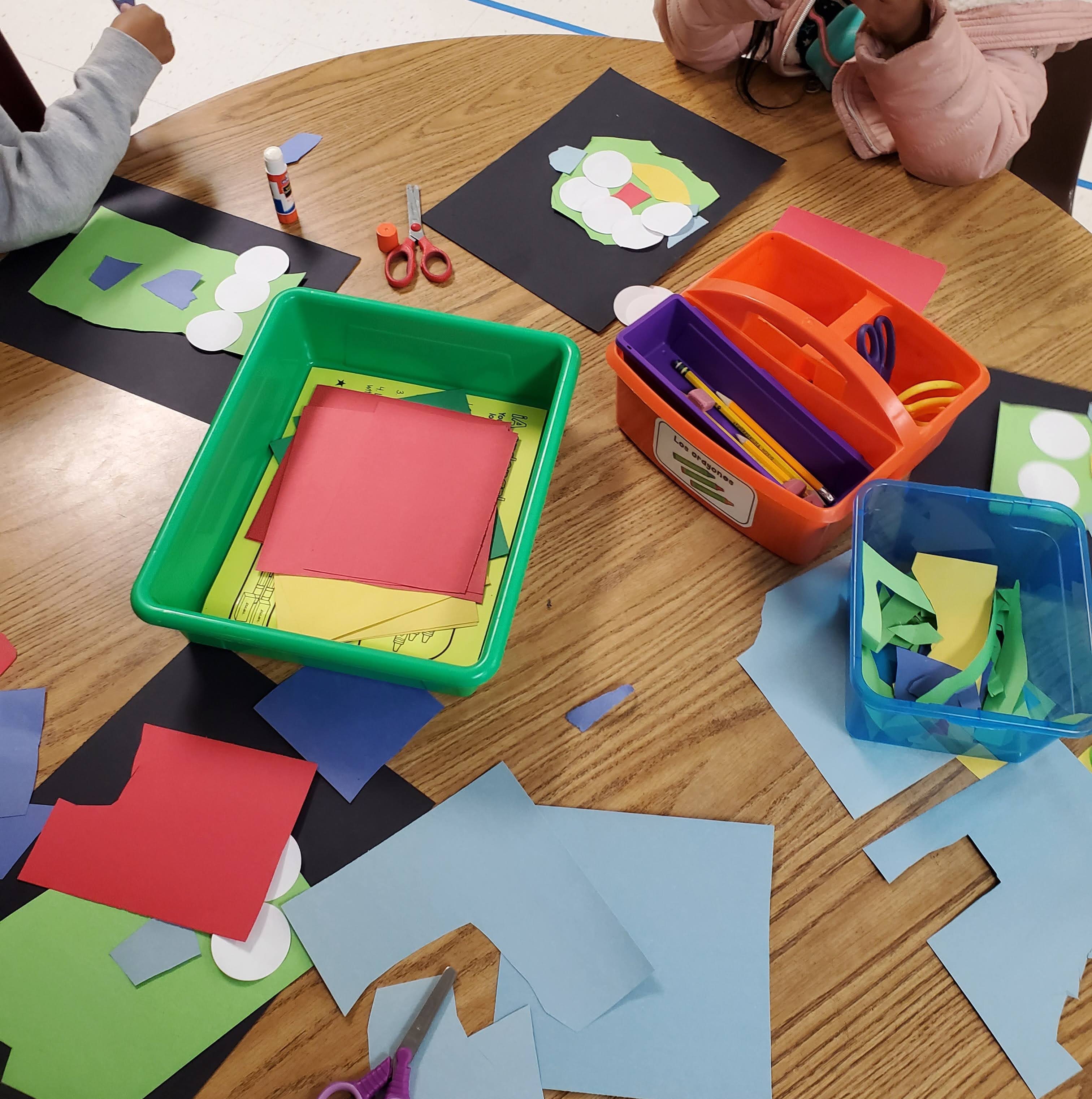
In the final two classes we've been making monstruos de papel. I give them the black paper and a smaller green paper to get them started. Then they make the mouth, nose, ears, any arms or legs with scrap paper that I put in the middle of the table. I also used the Ellison die cut machine to make circles for eyes. 

Pro Tip - I went around with a silver sharpie marker and wrote their names on the back since most of their names are still hard to read this time of year and because the black paper made it hard to see them.

In the last class, we use marker to add deatils and then we cut and paste our labels on. This is not your cutsie social media perfect project where they all come out the same, but each kid got to make it their own way and I absolutely love how they turned out!


Because we had been practicing body parts from the beginning of the year as well as colors and supplies I was able to stay 90% in the target language. I modeled for them how to cut and glue and then went around and narrated what they were doing in Spanish. While they're working is also a good time to ask them in Spanish about what colors are they using, what body part are they gluing down, etc. 

Click here to get your own Spin and draw monstruo page.

Click here to get the Adios Monstruo class book project.

And follow me on Instagram for ideas and inspiration!


Sunday, October 9, 2022

I'm back! And presenting on Cooperative Learning Strategies in the World Language Classroom

 So it's been awhile since I've posted here (although you can find me on Instagram and Twitter!) What has kept me from blogging? Well, the pandemic obviously but I got my Education Specialst degree and princpal licensure in December of 2021 which kept me very busy. I'm also on the board of KWLA (Kentucky World Language Association) as the Communications Director and PD Committee Chair.

Speaking of KWLA we had our first in-person conference since 2019! I presented on cooperative learning strategies in the World Language classroom. I've written about the Kagan structures I use in class before but it was fun to talk about and demonstrate them in person. Below is a link to my presentation! 


Title page to presentation All Together Now


Thursday, December 10, 2020

Winter lesson plans - Los pingüinos

Are you looking for some ideas for winter that are NOT about holidays? I try not to focus on Christmas because not all of my students celebrate it. Some don't even do any winter holidays. Earlier this year in first grade we learned about alebrijes and the students described their favorite animal. A LOT of my students really like penguins so I'm doing a short lesson before the break focused on penguins - it's the perfect winter lesson that's not holiday focused. Check out the resources below!

PENGUIN VIDEOS


This cute video has a fun dance to get kids up and moving


I like that this Pinkfong song includes some vocab I've already taught like salta, grande and has footage of real emperor penguins.

My students also love looking at live webcams of different animals - like this one at the Georgia Aquarium. You can practice numbers by counting how many you see or have students describe their color and actions, whether they like them or not, etc. 


PENGUI BOOK

I love this book Los Pingüinos Adoran los Colores. It's super cute, easy to understand, and a great way to review colors. The blog Teach and Tell Us also has a super cute freebie to go along with it. Check it out here!


If your school subscribes to Pebble Go they also have a LOT of articles in English and Spanish on different types of penguins. You could use and scaffold for novice speakers or just give the link and let them explore on their own. 


PENGUIN DIRECTED DRAW

My kids also love to draw. I'm doing this directed draw with K-2 so I wanted to keep it very simple. Before we start we're going to review with our body parts song so they could more easily recognize the different parts as I drew them. I also suggest logging into zoom on two computers so that you can pin the video of the camera where you're drawing. That makes it bigger so students can easily see what you are doing. 


At the end they have a cute picture that is wintery. For older kids you could have them label it or do a writing piece with it. Or you can have them add a hat in their favorite color to go along with the book!


Do you teach about los pingüinos? What resources or activities do you do with your students? Share in the comments below!


Tuesday, September 1, 2020

Asynchronous Elementary Spanish Lessons

 Well this is a year we'll never forget. It's hard to collaborate and share ideas right now because it seems like everyone is doing something differently - live, on-demand, hybrid, from home, from school, on a cart. 

My schedule is completely asynchronous. I post a lesson each day for one grade level and then field emails, comments, and Dojo messages that afternoon as kids and families complete the lesson. I am by no means an expert (and I don't really trust anyone who says they are right now!) but here is what is working for me.


Challenges in the spring - We had very low participation partly because of the following reasons: All the Special Area classes were in different places so it was confusing and overwhelming for families to know where to look each day. I just threw up links on Google Classroom with little direction on which ones they should do. There was no way for me to know if they had completed an activity or not (at least not how I set them up.)

Solutions for this fall:

How to post and organize each lesson - Special Area now has its own Google Classroom for each grade. Check out this post to see how we set it up so that it is easy to find that day's activities. It also is super helpful that we went from some kids having technology in the spring to being fully 1:1 with Chromebooks.


How students know what to do during the lesson -  My school does not have a paid subscription to Pear Deck or Nearpod but if you have access to one of these programs I highly recommend them. The free versions are great for synchronous teaching but you have to pay for the student-paced versions (you're paying for the reporting that comes with it.) Check out this video to see a demonstration I did back in the spring for KWLA. 

I like the Nearpod architecture and especially how it guides students through a lesson with - and this is super important - all of the links, videos, and activities in the same place. This part of these programs is just a slide deck, which is easy to replicate in powerpoint or Google slides.

Because we use Google Classroom all of my lessons are in Google Slides. The first slide has the essential questions and learning targets along with a short video from me explaining and modeling the day's activities. I've written about before how I start the year in English so that students understand the expectations and procedures in Spanish class. These videos are in English now but just if we were in school they will become increasingly in the target language as students get used to how to navigate the online lessons.


Then students click to the next slide which has our daily agenda (something I do regularly in the classroom so it's familiar.) Next, they click through to slides that have Youtube videos to watch and links to click to take them to sites like Quizlet.


For K & 1st I included audio files (and modeled how to use the buttons) for those kiddos who can't read yet. This way parents can get them started but then walk away and let the students work independently.

How to know if students completed the lesson and formative assessments - My final challenge has been setting things up so that there is some accountability and I know that the students have actually completed the lessons. I also need to get some formative assessment so I know how to plan for the next lesson. 

For the older students this is fairly simple. The last slide of their lesson is a link to an exit slip in Google Forms that they fill out. 

Exit slip for elementary Spanish


For grades 1-3 I have one slide where they have to drag pictures of animals or food depending on the grade under columns labeled Me gusta or No me gusta. I also included a video on the last slide that shows how to turn in an assignment on Google Classroom. This is especially important for Kindergarten because they can't produce any language yet. I just want them to turn it in so it is marked done and I can get an idea of how many students are actually watching the lessons. 


So that's currently what I'm doing. How are you structuring your asynchronous lessons? Share in the comments below or on Twitter using the hashtag #earlylang!

Friday, August 14, 2020

Special Area Google Classroom Set up

This past spring was a surprise and we as teachers did our best to pivot quickly to distance learning. It wasn't pretty and at my school we had some participation in Specials to start which quickly fell off a cliff. Partly because families were overwhelmed and partly because we were not well-organized (which made it more overwhelming!)

We are starting back this school year virtually and we don't know when we'll be back in the classroom. The way our schedule is currently set up we will only be doing asynchronous pre-recorded lessons. The students have 30 minutes of Specials in their daily schedule. It's not ideal but there are some schools where they aren't having Specials at all so I'm happy with what we've got. 

That being said, however, I don't want to see the same levels of participation so our team decided that we should house our Special Area lessons all in one place. This way students only have to check one place to see what are they supposed to be working on that day.


School doesn't start for another week and a half so this is all still in process so I'll keep you updated on how it all works out as we add more and the students get in there and start working.  And if you're not an elementary teacher then I recommend THIS VIDEO for how to organize your classwork.  I'd also love to what your schedule is going to look like this year and how you plan on organizing and posting work for students! Share in the comments below!

Thursday, April 30, 2020

Cinco de mayo Activities for Elementary Students

I'm going to be honest and say that I don't normally teach Cinco de mayo. It doesn't fit easily into my curriculum and I don't usually have time, but now with non-traditional instruction I've had parents ask me about it so I went ahead and compiled some links and activities for students to do at home.


Watch a video from PBS Learning Media about how Cinco de mayo is NOT Mexican Independence Day.


PBS also has interactive word searches for different grade levels. Students can color the Mexican flag - they can print it out OR color online.

These cute maracas make for a fun at home craft. And this video from 123 Andrés is adorable and fun! It is bilingual but introduces the instrument names in Spanish.


Here is another video (in English) highlighting the music of Mexico. I like this one because it teaches the kids some lyrics in Spanish.


Cinco de mayo is a great way to highlight some Mexican culture! What are your favorite resources for this time of year? Share in the comments below!

Wednesday, April 1, 2020

Quarantine Teaching Tips for Elementary Spanish

COVID19 has radically changed what education looks like right now. Some schools immediately switched over to distance learning while our district is making the switch with a three week turn time.


My school (as of 4/1) is out until April 20th. We are on spring break right now but the last two weeks we have been prepping for Non-Traditional Instruction or distance learning. For the first two weeks I was told to only give each grade level 4 activities - matching the number of times I would have met them in that time - and just review.

If we are out longer (highly likely) you might see me doing more but as of now here are a few things I'm trying to keep in mind as we pivot to our new reality:


1) Not every kid has access to technology. For our 10 day NTI plan our principal asked special area teachers to come up with 4 activities for each grade level - 2 max can require technology and at least 2 must be paper/pencil or can be completed without a device or internet access. Here is a link to my activities. My assumption is that I will have to add to these when it's announced that we'll be out longer than 10 days.


2) Keep it simple. While there are a TON of awesome resources that are free right now I'm probably going to stick with what I was already doing because that is what the students are used to. That means youtube songs, quizlet, activities on Google Classroom, Flipgrid, and partner games we've played in class etc. 

         2a) Check those resources out though and see if there isn't anything you might want to pay for             next year! Basho and Friends I'm looking at you!

3) Keep it short. Reading parents' experiences on social media and talking to my best friend who has three kids at home right now it is really easy to go overboard. What might take 30 minutes in class might take three times as long at home. I'm trying to keep anything I send home to 10 minutes or less. There's no way for me to make sure that my students are doing the work, but if I give level appropriate, short, engaging activities then I hope they will do them, but "I get what I get and I don't throw a fit."


4) They still need input somehow. My principal didn't want me sending home huge packets for Spanish class but I realize I need to send home at least one page per grade level that has the vocabulary in a comprehensible way so that students can complete the tasks I've given them. At the most I'm planning on sending home a page that has a front and a back.


5) Use this time to advocate. Stay in touch with your students and their families when and where you can. I'm using Class Dojo to send links to practice while we roll out NTI. I plan on making some videos for kiddos as well. I've already had a kindergarten student's mom send me a photo of her daughter looking up her favorite animals in Spanish. 


6) Use social media for good. It can be mentally taxing to be on social media right ow but there is a lot of good ideas, webinars, and resources being shared. I highly suggest Teaching Spanish for Kids on Facebook for ideas especially related to younger learners. 


7) Try to relax. This one is the hardest since we don't know what is going to happen next. But my principal has bee very adamant that we take care of ourselves. For me so fat that means getting dressed every day (even putting on make-up!), calling friends and family, and taking walks with my dog.

8) Don't compare yourself to others. This one is really hard for me. I look around on social media and I see friends and people I look up to giving webinars, creating tons of resources, making videos, and already holding Zoom meetings with their students and it's hard to not feel bad because I'm not doing any of those things. Mostly because we haven't started yet but also because I've been asked to not overwhelm our families. I'm also finding that I'm a "do a puzzle/take a walk" kind of person when it comes to being stuck inside and not a "make all new resources" kind of person. That doesn't make me less of a teacher or even a teacher leader.

We all care about our students and are doing our best by them. Hang in there! And let me know if you have any questions or great ideas to share in the comments below!