Thursday, April 23, 2015

Getting EVERYONE talking

Sometimes I go to workshops and I come away with BIG ideas. And sometimes I come away with smaller ideas. Small but not unimportant. Often these slight tweaks to my teaching make a BIG impact.

I've made one such tweak since attending a 2 day workshop with Dr. Helena Curtain. During the workshop she had us make clock partners. At certain points we would have to walk around the room and have a short conversation with our 3:00 partner then switch and talk to our 7:00 partner. At the end of each conversation she had tell our partner, "Thank you, partner. I really enjoyed talking with you. Goodbye."  Or at our tables we might finish up with "du bist intelligent partner. Helena ist super intelligent." 

Now I could see the pre-chosen partners working really well in a middle or high school class where you saw the same students every day but not so practical in my class. However, it got me thinking about how I have kids talk in class. We do partner talk with a mix of Whole Brain Teaching and Kagan techniques. And I have the students pat themselves on the back and say "muy bien" when we mark something off the schedule for the day. But I realized that a LOT of the time I have kids just sitting at their tables or on the carpet talking to the same people every time. When I asked questions I would just call on one student at a time while everyone listened (or probably more likely daydreamed.)


So how to fix it so EVERYONE is engaged and talking?

- My afternoon classes are wild. So even though I don't have them have clock partners I do have them stand up and walk around the room to find two partners to ask ¿Cómo estás? rather than having them talk to their shoulder and face partner every time. Already I am seeing better behavior with just that little bit of movement at the beginning of class.

- I'm trying to design things so that EVERY student is speaking during class - not just me and not just one of them. When we do calendar, they talk with their partner and decide the day. I call on someone. Then I tell them to tell their partner the correct answer. Most of them had the correct answer before but instead of me calling on just one person they all get to say it not once but TWICE! At the end I tell them to tell their partner, "Eres inteligente amigo." And because I think it's hilarious, "Amigo, ¡Ms. K es super inteligente!"

- We've been doing a short poem in kindergarten about two monkeys eating a banana. I used to have two students come up and act it out while we said it. After the workshop I made a class set of laminated bananas. Now everyone gets to act it out while we say the poem together.

- Instead of saying muy bien to themselves, now they turn and tell their partner, "¡Muy bien, amigo!" or "Gracias, amigo." A very small tweak but helps practice socialization skills.

- I reviewed HOW we talk to partners in English (then later switched to Spanish): We make eye contact. We smile. We use college talk. College talk comes from Whole Brain Teaching. Students are not only supposed to be speaking in complete sentences but supporting their ideas with details. Now my novice learners can't really use college talk in the TL but it does encourage them to ask follow up questions like ¿Por qué? My third graders love to answer "¿Cómo estás?" with "Estoy enojado" or "Estoy triste." When their partner asks ¿Por qué? they make up some crazy answer in English like "porque Olivia pushed me on the playground!"


So my small tweaks are helping to make sure that everyone is engaged and talking in the target language more - so important since every minute counts! I know it's super basic but it's so easy to overlook. How do you get everyone talking in your classes? Share in the comments below or on Twitter using the hashtag #earlylang!


Saturday, April 18, 2015

Pinta Ratones

We have been studying colors in kindergarten. At the beginning of the year we sang the song El gusano Tutu.


After learning about El Ratón Pérez, we read the book Mouse Paint or Pinta Ratones. And then we reviewed the story with storytelling props. (You can get them here!)  They had read this book earlier in the year in English with our art teacher so it was a great review.


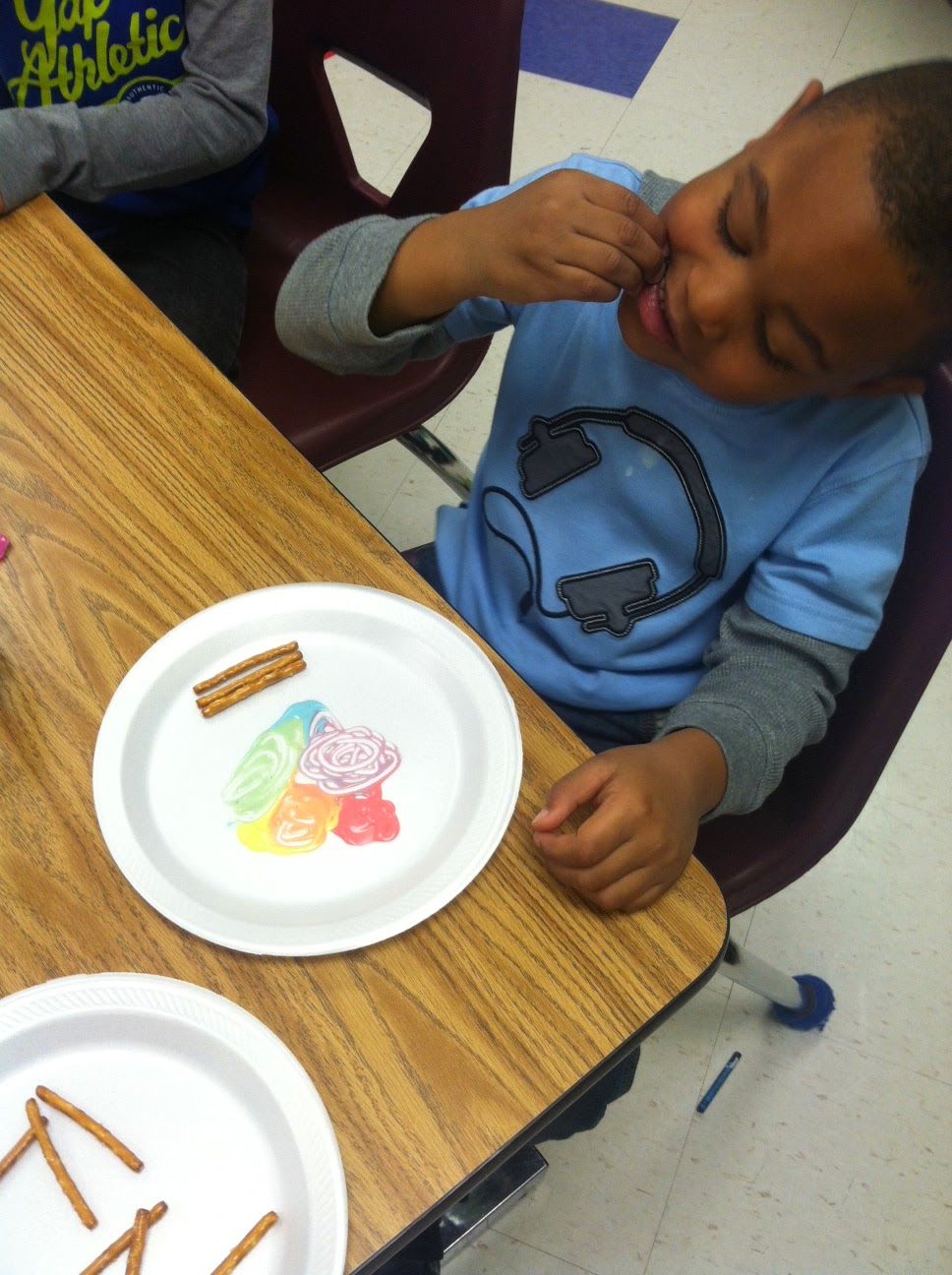
Finally, we mixed colors like los ratones except that instead of using paint, we used food coloring in ranch dressing and instead of paint brushes we had pretzel sticks. I quickly modeled how to mix the ranch with the pretzel sticks and we reviewed the colors in Spanish. Before they were allowed to eat I asked them ¿Cómo estás? and they answered ¡Tengo hambre! Then we got down to the serious business of mixing our colors and then eating our masterpieces. 


I found this idea on pinterest. And based on the hugs I got as they filed out the door I'm going to call this a #pinterestwin.

Saturday, April 11, 2015

El Ratón Pérez

My littler kiddos - especially kindergartners - LOVE to tell me all about how many teeth they have lost, which teeth are loose, and how much the Tooth Fairy has brought them. After reading Mundo de Pepita's blog post on authentic tangible culture for children, I was determined to use that enthusiasm to tell me about their teeth and direct it towards an authentic cultural learning experience.

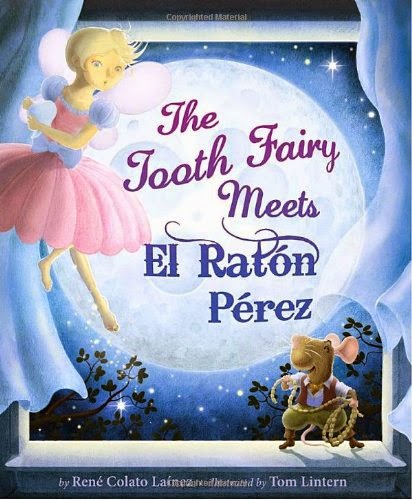
First I read them the book "The Tooth Fairy Meets Ratón Pérez". This book is in English but it's a great introduction to the topic and includes several Spanish phrases. At the end we compared and contrasted the Tooth Fairy and El Ratón Pérez. 


I also purchased Mundo de Pepita's printable book and activity pack. It comes with a cute printable book, storytelling props, tooth posters where you record students' who have lost teeth, certificates, and tooth holders for kids who lose their teeth at school.  


Over the course of several weeks, we worked on the phrases "Tengo un diente flojo" and "Se me cayó un diente."  I wrote the names of any student who could tell me in Spanish that they had lost a tooth.   We also read the book "El diente de Javi" and acted it out using the storytelling props. They LOVED it! 

I also put a little puerta de Ratón Pérez near the door. Students love to get down on the floor and investigate. They say Hola and Adios to him as they leave and it's been a great conversation starter with the older students who have asked me why is there a mouse door on the wall. You can find the door here. 


This mini unit was also a great introduction to the book Pinta Ratones (Mouse Paint) which we are reading as a review for colors (more on that later!)

Do you teach about El Ratón Pérez? What other culture do you use with your elementary students? Share in the comments below or on Twitter using the hashtag #earlylang!

Wednesday, April 1, 2015

Deep and rich activities for learners

I used Languages and Children: Making the Match*** by Curtain and Dahlberg in my certification program. Then in my first month of teaching, I attended a workshop at the KWLA conference with Helena Curtain. I was a stressed out first year teacher who had no clue how to get my students to listen to me in English let alone in the target language. I wanted to do 90% TL but I just didn't see how it was possible when I was crying in the bathroom after an hour with third grade. As the "lone ranger" I wasn't getting a lot of support. (Do any of us teaching elementary school get the support we need?) However, by the time I left that short workshop Helena had given me hope that I could do what needed to be done. She is truly one of the kindest, most encouraging teachers I have met.  So when I saw she was coming to our district to do a 2 day workshop I was pumped.


The main theme of our two days together was giving our learners what they need. And what do learners need? They need activities that are deep and rich. 

Helena gave us four guidelines to ask ourselves when planning our lessons.

Ask yourself is this activity....

1. Intrinsically motivating? Will the kids be excited by this? Does it establish a context for the new language?

2. Cognitively engaging? What other content/area/skills does this connect with? Can you connect it to math, science, arts & humanities, or economics?

3. Culturally connected? Does this connect to the target culture?

4. Communicatively purposeful? Does this encourage interpersonal communication and build proficiency among ALL students?

She stressed that not every activity needs to hit all four points - although they should hit at least two. Personally, I try to make sure that all of my activities are communicatively purposeful since I have so little time with my kiddos.

Did I get my textbook signed? Yes, yes I did. And a photo!!!


What do you think of these four guidelines? What do you try to keep in mind when planning your mlessons? Share in the comments below! And there's more to come from our two day workshop.

*** The 5th ed. is titled Languages and Learners: Making the Match. AND I'm honored to have a picture from Señora Speedy included!

Saturday, March 21, 2015

Strategies for Lining Up in the Target Language

I don't get to see my students nearly as much as I would like, only 25 minutes twice in six days. So I try to maximize EVERY moment I have with them. We  practice vocabulary as we line up and while we wait for the classroom teacher to pick them up. Because I love a good routine, we always say 1, 2 adios and then I dismiss students either by table or by rows from the carpet. My carpet has rows of different colors so my students are always practicing their colors as they line up at the end of class. My tables have flags from Spanish speaking countries hanging over them so my older students are constantly reviewing their country names. I always give the directions for the end of class in the target language.

How they get into line is important too. My K-2 students we learn a new animal in each new chapter. So far we have el pez, el mono, y la rana. Students will "nadan" into line like fish or "saltan" into line like monkeys or frogs. Last week my second graders noisily lined up like monkeys. I reminded them that, "Podemos ser monos en la clase de español pero somos como los peces en el pasillo." They quietly swam out the door. When we did our flamenco unit students danced into line.

Many times, we have to wait on the classroom teacher. Or for a traffic jam (all the Special Area classes are in the same hallway and it can get clogged up as one grade level leaves and another makes it way to Specials) to clear. While we wait, I like to play Diego Dice (like Simon Says) or Teléfono while we wait. Students must be quiet in order to play the game and we are still practicing Spanish.

Other times, I will get out flashcards and go down the line quizzing students. This strategy also serves as a very quick formative assessment. When we did Days of the Week I had students play a game where students had to say the days in the correct order. We went down the line and each student had to say only one day, forcing them to listen carefully. If they said the wrong day or took too long they had to sit down in the line. My more observant students rocked this game once they realized there is a poster with the days on it right by my door.

And my final strategy for lining up - give them something authentic and interesting to look at in the target language by the door. I have lots of memes and cartoons posted by my door that even 100+ days into school still captivate their interest. As they learn new vocabulary they notice and understand more of the pictures. One student last week asked me if one of the pictures was new. "No," I said, "You just noticed it because now you know that word."

There's also some Kid President just because I love Kid President. :-)
 What are your strategies for lining up in the TL? Share in the comments below or on twitter using the hashtag #earlylang!

Saturday, March 14, 2015

Bulletin Board Ideas

I have a love/hate relationship with bulletin boards. I hate how long it takes to put them up. I hate how sweaty I get doing it. I hate how I never ever seem to get enough butcher paper to cover the entire board the first time. I hate how despite the fact that I've threatened to cut their fingers off, my students still touch the board, lean on the board, and pull things off of the board.

But there are parts I love. I love coming up with ideas and creating the different pieces. I love sitting back and admiring the results of my hard work. I love watching my students look at the board every day and practice their Spanish.

Here are my creations from this year.


Bilingual manners board - August 2014


Flamenco - Hispanic Heritage Month 2014


Feelings and body parts - Winter 2014


 Days of the week and food - Winter/Spring 2015


Share your bulletin board pics in the comments or on Twitter with the hashtag #earlylang. 

Thursday, February 19, 2015

#Teach2Teach - Most troublesome experience

I'm a little late to the game but this in response to the #Teach2Teach movement started by Amy Lenord. In-service teachers answer questions posed by pre-service teachers. You can check out more at the website here or follow the #Teach2Teach hashtag on Twitter.

Q3 "What has been your most troublesome experience with teaching and how did you handle it?"

I've had lots of troublesome moments in my career.

- While teaching English in France a student told me to suck his you know what. When I complained to his regular English teacher her response was "Well, at least he was speaking English." Really??? Nothing like being sexually harassed by a 14 year old.

-While teaching English in Japan a teacher with control issues thought I was stressing out her first graders by making them repeat after me in complete sentences. She complained about me to the principal who then asked that I teach "words only - no sentences."

- While teaching on a cart I had classroom teachers who thought nothing of having loud conversations in the room while I was teaching, and then later informed me that while their kids love Spanish this was their room and their plan period so they'll talk to who they want when they want. You have to develop a thick skin when you teach on a cart.

- Several parents argued that their children should not have to learn Spanish. Without consulting me my principal allowed one student to go to music or gym rather than my class. (To be fair, I probably would have given into this particular parent too.)


But one troubling moment that stands out came in my first year when I realized that no one knew what I was doing in Spanish class. And what's more no one cared. No one cared. A hard pill to swallow for someone like me who is passionate about what I do and appreciates recognition for my hard work.

I got down in the dumps for awhile until I realized its potential. I have complete and utter freedom.  I can do whatever I want. I have the freedom to be creative and try new methods. If my kiddos get excited about a video (like they did with Adios monstruo) I'm not a slave to a state curriculum and can extend a unit past what I had planned because my students want to explore a certain topic more. And slowly, through engaging my students, through connecting with parents at Family Nights like Culture Fair and Hispanic Heritage Night, through sending my administrators "look what we're doing in Spanish class" emails, I am advocating for World Languages at my school.

I look at the classroom teachers at my school freaking out over KPREP and MAP data. They have weekly meetings with the principal and student achievement conferences. My job is at the mercy of grant money and my own self-advocacy. Theirs are at the mercy of test scores.  Do I sometimes resent that I have to advocate in ways a reading specialist or math teacher will never have to? Definitely, but it's reality. And I would rather worry about student engagement and proficiency (and yes, grant money) than test prep and scores.

Besides, what I have is pretty great. I have a room this year. My principal bought me a super fancy cart and the Calico Spanish curriculum I asked for last year. I got the split schedule I want so I see my kiddos twice in the rotation rather than just once. My principal told me she hasn't had a single email this year or last complaining about kids having to take Spanish. At my mid-year conference this year I told my vice-principal that "Now that I have a room, I'm going to start bothering you for more time." And she didn't complain or brush me off. She just asked what that might look like. That, folks, is progress.