Saturday, January 30, 2016

Caperucita Roja Readers Theater

I posted earlier in the year how the story Caperucita Roja is a great for teaching/reviewing introductions and body parts. I did the same readers theater script with my third graders just before winter break but expanded the unit to include a performance in front of a live audience.

My 3rd graders are a tough bunch.  It is often difficult to get them to stay on task. I noticed that when we did Ricitos de Oro y los Tres Osos that they didn't get into the choral reading as much as my second graders did. I wanted to make sure everyone was reading and actively participating so I let them just listen and watch while we did it in a big group.  Then I distributed scripts and let them read and perform it on their own in small groups.

The hook was that after practicing each small group would perform for the class. The best class performers would then be our actors and actresses for a special performance for the 1st graders (who had just finished studying body parts so this would be a great review.) While this did lead to some fights over who read which part, it also had them working hard to read it well, with fluency and emotion, rather than just sitting there and barely mouthing the words like they had with the Tres Osos script.

Our actors performing for 1st grade

The kids who didn't get a speaking part for the big performance still had work to do. Every student made a program for the first graders with one of the characters from the play with body parts labeled. Several girls worked on the scenery during recess and after school. We also had ushers, people to pass out programs and snacks, custodians to clean up, an announcer to welcome the 1st graders, and basically any other small task I could give kids so that everyone was involved.

Every 3rd grader designed a program

It was a HUGE success. The first grade teachers raved about how well the kids read and their students loved it. One first grade student told me "Estoy bien. Estoy dos biens" which was her cute novice way of saying two thumbs up. And the 3rd graders had a blast. It took some extra coordination between me and the classroom teachers but it was well worth it.

The 1st graders loved getting a snack, program, & watching the play.

Get your copy of the Caperucita Roja Readers Theater HERE!


A big shout out to my colleague Alfonso de Torres Núñez who originally gave me the idea of doing readers theater and performances. Have you used readers theater in your classes? Share in the comments below or on Twitter using the hashtag #earlylang!
Saturday, January 23, 2016

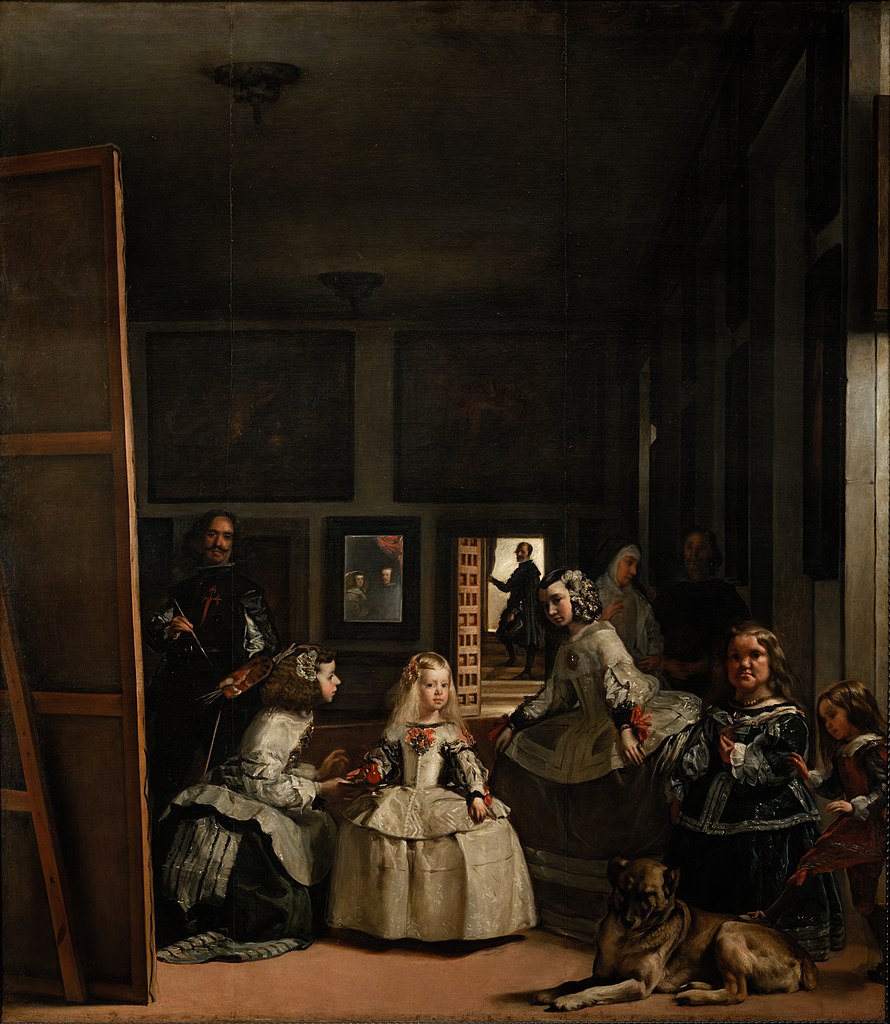
Las Meninas

We've been continuing with the art theme in Kindergarten. After learning about Joan Miró, we moved on to Diego Velázquez and Las Meninas. I had seen this painting in Spanish classes and books for years but was absolutely mesmerized by it at the Prado in Madrid.

We started out by just looking at the painting (muchas gracias to my Art teacher who let me borrow her large poster of it) and describing the colors that we saw and saying if we liked it or not. Then we looked more closely at the figures in the painting and talking about them using puppets.


I created Las Meninas puppets by copying and pasting images of the painting in Word and then using the snipping tool to cut out the different figures. Then I printed, laminated, and glued them to popsicle sticks. The students already knew the word artista so I introduced princesa and amiga using the puppets. They asked the puppets ¿Cómo te llamas? and then introduced themselves to Margarita with a bow (because as every 5 year old girl knows you do NOT shake hands with a princesa.) Students also came up and found the different figures in the painting and named them.


Next, we read the book Katie and the Spanish Princess. This book is in English but I translated the words that we already knew into Spanish like princesa, artista, arte, amiga, gracias and venga. I also introduced some new ones like museo, pájaro, and pápa. I found pictures of the paintings in the book and put them into a Word document that I then projected on the SMART board. It was hilarious to watch as they realized that the paintings were the same - Ms. K is magical that way! At the end of the book Katie decides she would rather be a pirata than a princesa so I asked each kiddo what they preferred. Naturally the boys wanted to be piratas and the girls princesas.


We finished up with a coloring page of Las Meninas that I added some text to. As before, I walked around and asked students to tell me what colors they were using.


The next step in our artistic journey includes Pintas Ratones and mixing up color wheels.

If you're interested in the Las Meninas puppets leave a comment below and I will email them to you!

Saturday, January 16, 2016

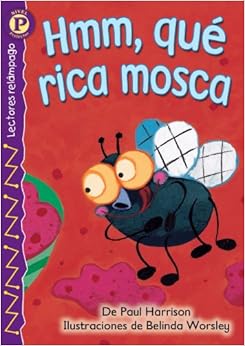
Hmmm, qué rica mosca

We have been working on expressing likes and dislikes in 1st grade. We started with my favorite song Chocolate but since I only have 15 minutes with them, trying to do my full Chocolate unit with Ricitos de Oro and drinking chocolate caliente didn't seem feasible. So instead I took an idea I got from a colleague at one of our FLES Swap Shops and read them the book Hmmm, qué rica mosca.


In the book, a very hungry fly tries many different and very unhealthy foods. At the end of the story a frog eats the fly. While it doesn't actually have Me gusta in the book, I added it since that was our target structure. We then practiced sorting foods by saludable and poco saludable (which ties in Health and PE standards!) After several lessons talking about healthy and unhealthy foods we rewrote the book so that la mosca eats healthier foods and then escapes la rana at the end.


Students picked a card with a healthy food and then wrote and illustrated their book page. I collected all the pages and made them into a class book (because long time readers know how much I love making class books!)  The kids knew that Ms. K está triste at the end of the original story but with this new book, estoy bien porque la rana NO come la mosca. 


As always the kids loved seeing their book pages. Most of them read along with me and told me if they liked or didn't like the different foods. Thanks Matt for this awesome idea!

You can get the book template here!

How do you teach likes and dislikes? Share in the comments below or on Twitter with the hashtag #earlylang!

Saturday, December 5, 2015

Rally Coach for reading exercises

I wrote about Kagan earlier this year and I'm still raving about the different structures and how well they work in my class. My new favorite for reading is Rally Coach.

So what is Rally Coach? Here's a quick video to explain it.


In my class, I hand out one clipboard with the reading exercise in a sheet protector and one dry erase marker to each pair (with 100 kids per grade level this saves a TON of paper.) Students must sit so they can both see the board. They must also read the question out loud and say their answer out loud. I tell them they are not allowed to write any answers until their partner or "coach" has approved it and told them, "Sí, ¡Muy bien!" If the answer is not correct their partner will say, "Let's look again." Once they agree on an answer, the partner with the marker writes it down, and then passes the board and marker to the  other student. They work and pass it back and forth until they are done. Because kids work at different speeds I tell students to play Yo Veo when they are done. Once I hear lots of I spy going on I pull them back and we go over the answers. 

This year so far, we've done this with a reading in Spanish about a monkey who eats too many bananas and gets sick and with a cultural reading in English about La noche de las velitas. I purposely create the worksheets so there is a column for partner A and a column for partner B. 

So why do I love it? Because EVERYONE is engaged and working. Even my usual slackers are more on task because they are held accountable by their partner. The trick to making it work is 1) Have a task that isn't too difficult and 2) model each time beforehand so students know what is expected (right now I still model in English but as we do it more I will switch to Spanish.)

Do you use Rally Coach or other Kagan structures in your classes? Since I'm just getting started with these I'd love to hear other teachers' experiences.  Share in the comments below or on Twitter using the hashtag #earlylang!


Saturday, November 21, 2015

Focus on conversation

I've always tried to focus my classes on communicative language rather than grammar. I want my students to speak the language not learn about the language but I've always been the one doing the 90% target language and not my students. So how to change that? Or at least increase my students' TL usage in class?

The answer came from French teacher and KWLA president Sara Merideth. She mentioned keeping key phrases right above the board and focusing on those until students knew them and then replacing them with new ones, constantly building the students' conversational skills.

Sounded good to me so I tried it. I moved my question word wall from the side to right up front - literally right over the white board where I keep the schedule for the day, our I can statements, and WBT scoreboard. Guess what happened? My students are asking more questions! They shout out things like ¿Por qué? ¿Qué? ¿Dónde? While watching a video 2 fifth graders asked me ¿La cámara...hmmmm....dónde? A great example of novice learners using questions!

So I took it a little further. I have a bulletin board just behind where I sit with my white board where I added additional useful phrases. I move one or two to the white board and give students incentives for using them (a ticket that they write their name on and put in a box - once a month I pull out several students names and they win a piece of chocolate.)  We started with ¿Cómo se dice ___ en español? in September and added ¿En serio? for October.


Our useful phrases are written on sentence strips and are stapled on my bulletin board.

But my kiddos noticed that a lot of the phrases are great when playing games - like calling each other out for being a tramposo or Me rindo/No te rindas or  yelling ¡Toma! or ¡Te gané! when they win. Or Tranquilo when we´re getting too loud. My fourth grade classes had me cracking up because several kids in the front were craning their necks to see what phrase they could use next while one kid in the back raised his hand and asked ¿Cómo se dice I'm confused en español? because he couldn't see the board. I've since added the phrases where the back of the class can see them easily as well. We also added them to their folders.

Students glued the phrases to their folders so they're always handy.


When we played Diego Dice (Simon says) they were telling each other to sit down in Spanish and I had to teach them "I didn't do it" on the fly so they could defend themselves against accusations of being out of the game.

We sit on the carpet during class but I know one of my high school teacher friends has a list of useful phrases taped to each desk in her room. Or you could keep them on tables or taped to folders so students can access them easily. Combined with some incentives or competition for using the most target language can really get them talking.

Get a copy of the useful phrases here.


How do you get your students talking in the target language? Share in the comments below or on Twitter using the hashtag #earlylang!

Saturday, November 14, 2015

Chocolate Clapping Game

Kids of every culture love clapping games.  They're not hard to learn, it helps with pronunciation, and ties in kids' culture. Since we already sing about chocolate when doing my likes and dislikes chapter it was a perfect opportunity to add the clapping game Chocolate.

Chocolate
Choco choco la la
Choco choco te te
Choco la choco te
Choco choco la te


I used this video to introduce the game. I like it because it shows two girls around the same age as my students. 


Then we practiced for a couple minutes at the end of each class. This also makes for a great brain break if you have longer classes. My students LOVE it! Even my boys. I have morning duty in the cafeteria and I usually end up having to clap with at least 3-4 students each morning. Some of them have gotten really really fast!

Here's a video of one of my classes. (Thermal filter so their faces are obscured.)


Do you use any clapping games in your classes? Or other culturally authentic games? Share in the comments below or on Twitter using the hashtag #earlylang!
Friday, November 6, 2015

Cinco monitos saltando en la cama

Our animal for Chapter Two is el mono with an emphasis on the verbs comer (eat) and saltar (jump). This year I have been experimenting with more TPRSish storytelling techniques. I´ve used 5 Little Monkeys Jumping on the Bed before but this year I wanted to make sure that the students were not just learning that monkey is mono but also learning some high frequency phrases.

I started with this basic video that focuses on the structure There is _____. Some kids got frustrated at how slow it went but I knew it was working when a fifth grade boy told me in the car rider line one afternoon, Hay un mono. ¿Dónde? I asked him. Then he pointed to himself and said it again.


After watching this video I showed them another video - this time with real monkeys. With this video I turn off the sound and together we describe what we see. Hay un mono. Hay dos monos. El mono come. El mono salta. One student told me, "Estoy triste" when the monkey steals and eats a bird egg. The students generally react with excitement when watching the real animals. I've used similar videos when talking about other animals.  (One thing I will do better next time is make sure that the students know these monkeys live in Costa Rica. We can find it on the map and ask if Hay monos en Kentucky? for a quick comparison.)


In the next class I told them the story of the Cinco Monitos using the storytelling props from Kizclub.com. I start out by pulling out one monkey and questioning students about how many monkeys there are. At some point I tell them NO, no hay un mono. Hay dos monos and I pull out the second monkey. Then repeat until I surprise them with the third. And so forth up to five. Some classes get smart and will say the next number before I can while other classes wait for me to spring it on them. Below is how I ask the questions during the story. I have the two sentences. Hay ___ monos, Los monos saltan en la cama, and No más monos saltando en la cama up on the board so students can easily answer my questions. I ask them to answer chorally and also individually, mixing it up so they have to pay attention.

¿Cuántos monos hay? Hay cinco monos. ¿Hay 2 monos? No no hay 2 monos. Hay cinco monos. 

Los monos saltan. Los monos saltan en la cama. ¿Los monos bailan el flamenco? No, los monos saltan en la cama. ¿Los monos comen las bananas? No, los monos saltan en la cama. 

Mamá mono llama al doctor. El doctor dice, "¡No más monos saltando en la cama!"

¿Hay cinco monos? No, no hay cinco monos. Hay cuatro monos. ¿Cuántos monos hay? etc. etc. 

Even my fifth graders are enjoying listening to this story. I've had several classes groan when I said it was time to go. They especially like to yell the answers when I say the wrong thing. There's something about correcting the teacher that gets them no matter what age they are.

High frequency phrases to focus on:

Hay ____.
El doctor dice _____.
No más ______.


After finishing the story we watched the video and sing along. The way I tell the story doesn't match the song exactly but it´s close enough that the students understand and can sing along to almost all of it. If you have a rowdy class that needs to get some energy out, I highly recommend jumping around to 5 Monitos. It works wonders


So that's what we've been doing in Spanish class! What have you been up to? How do you teach high frequency phrases? Do you use storytelling or TPRS? I'd love to compare notes. Share in the comments below or on Twitter using the hashtag #earlylang